Last Updated on April 11, 2026 by admin
Most cats recover from spay or neuter surgery within 10 to 14 days, though males often bounce back in under a week. The key to a smooth recovery is keeping your cat confined, preventing wound licking, and knowing what’s normal versus what needs a vet call.
Spaying (ovariohysterectomy) is a more invasive abdominal procedure than neutering (orchiectomy), so female cats need stricter activity restrictions and a longer healing window. Both surgeries are among the most common veterinary procedures performed — the ASPCA estimates that roughly 80% of owned cats in the U.S. are spayed or neutered. Here’s what to expect and do at each stage of recovery.
Day-by-Day Recovery Timeline
Recovery speed depends on the surgery type, your cat’s age, and overall health. Here’s a general timeline based on guidelines from the ASPCA Spay/Neuter Alliance and veterinary surgical standards.
Day 0 (surgery day): Your cat comes home groggy, possibly wobbly, and may not want food. Anesthesia effects typically wear off within 12 to 24 hours. Offer water but don’t force food.
Days 1–2: Appetite should return. Some cats eat normally within 12 hours; others take up to 48. A small amount of lethargy is expected. Monitor the incision site for bleeding or swelling.
Days 3–5: Male cats usually act like themselves again. Females are still healing internally and need continued confinement. The incision edges may look slightly pink — that’s normal inflammation.
Days 5–7: Males can gradually resume normal activity if the incision looks clean and dry. Females should stay confined.
Days 10–14: Female cats reach full external healing. If your vet used non-dissolvable sutures or staples, a follow-up visit around this time confirms everything has closed properly. After vet clearance, normal activity can resume.
Setting Up a Recovery Space
Your cat needs a quiet, contained area for the first several days. A spare bathroom or small bedroom works well. The space should include a soft bed or blanket at ground level, a litter box with low sides, fresh water, and a small amount of food.
Avoid elevated surfaces. A cat that jumps onto a counter or bookshelf 24 hours after a spay risks reopening the abdominal incision. Keep them at floor level for the full recovery period.
Use a clean litter box and change it more frequently than usual during recovery. The ASPCA’s post-surgery instructions specifically recommend keeping litter boxes clean to reduce infection risk at the incision site, particularly after spays where the surgical opening is abdominal.
How to Stop Your Cat From Licking the Incision
Cats instinctively lick wounds, but licking a surgical incision can pull sutures, introduce bacteria, and delay healing. Wound licking is the most common cause of post-operative complications in routine spay/neuter procedures, according to veterinary surgical guidelines.
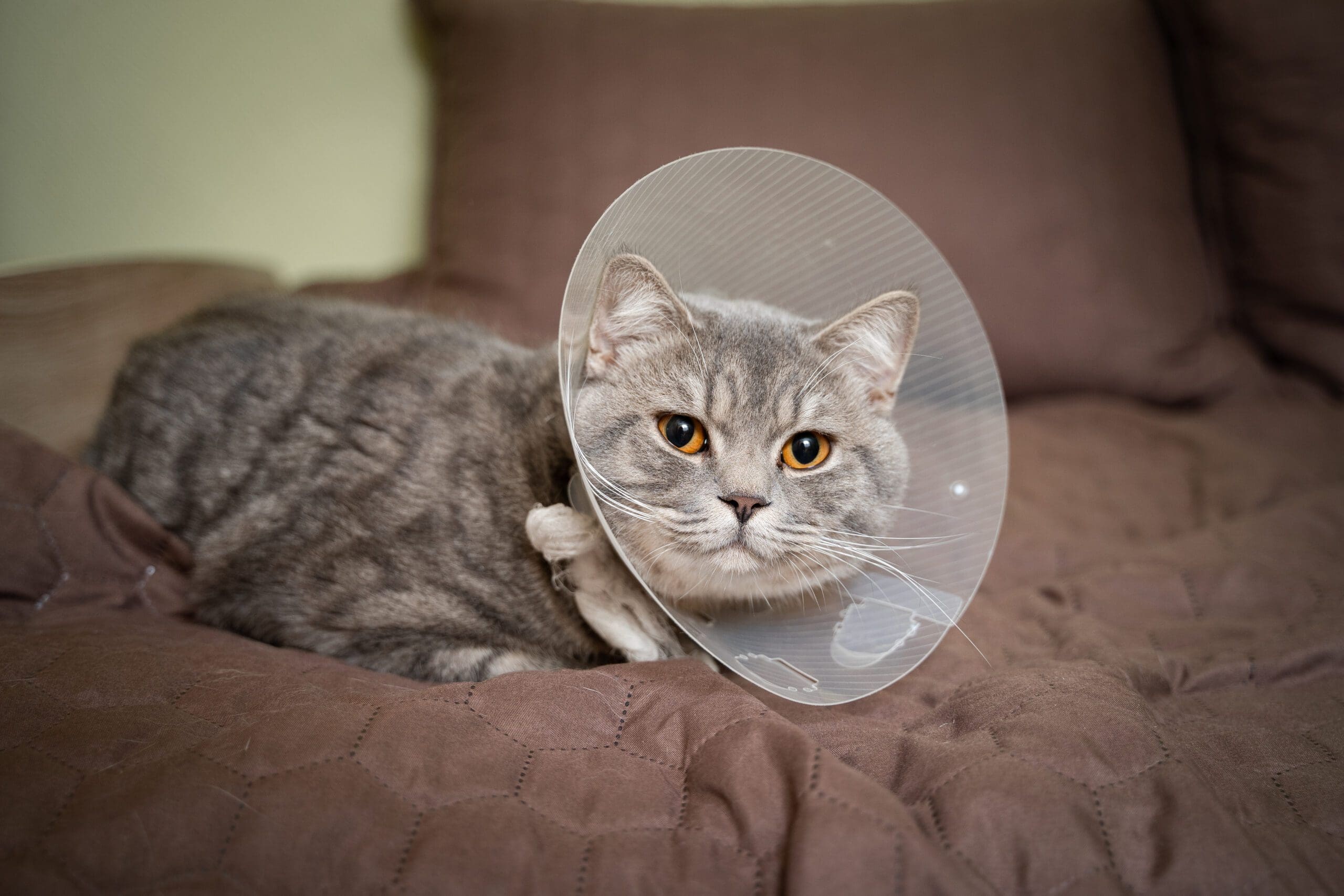
Your vet will likely send your cat home with an Elizabethan collar (cone). If your cat won’t tolerate a cone, alternatives include post-surgery recovery suits that cover the torso, inflatable donut collars, or medical pet shirts. Recovery suits have an advantage for spays — they apply gentle compression to the abdominal area, which can reduce swelling.
Whatever you use, keep it on for a minimum of 7 to 10 days. A 2020 study published in Animals (Shenoda et al.) found that 77% of pet owners felt the cone reduced their animal’s quality of life, but the wound protection it provides is worth the temporary discomfort. Check that your cat can still eat, drink, and use the litter box while wearing the device.
What’s Normal After Surgery (and What Isn’t)
The first 24 hours post-surgery come with some alarming-looking but completely normal behavior. Expect heavy sleeping, unsteadiness, reduced appetite, one episode of vomiting, dilated pupils, or unusual quietness. These are anesthesia effects, not complications.
Call your vet if you see any of the following: vomiting more than once, refusing all food and water beyond 48 hours, labored or rapid breathing, pale or bluish gums, bleeding from the incision, lethargy lasting beyond 24 hours, or failure to urinate within 24 hours of returning home. The ASPCA Spay/Neuter Alliance notes that lethargy beyond 24 hours, diarrhea, or repeated vomiting are never normal after this procedure.
Checking the Incision Site Daily
Inspect the wound once a day, ideally at the same time so you notice changes. A healing incision will be slightly pink at the edges, dry or barely moist, and closed with edges meeting cleanly.
Warning signs that need a vet call include bright redness spreading outward from the incision, yellow or green discharge, a foul smell, the wound gaping open, or significant swelling around the surgical site. Some light bruising near a female spay incision is normal and resolves within a few days.
Don’t apply hydrogen peroxide, antiseptic, or ointment to the wound unless your vet specifically instructed it. The American Veterinary Medical Association advises that many topical products actually slow wound healing or irritate surgical sites.
Feeding Your Cat During Recovery
Offer water as soon as your cat is alert after coming home. Most cats will drink within an hour or two. For food, offer a small portion of their regular diet the evening of surgery — about half their normal amount. Anesthesia can cause nausea, so a smaller meal reduces vomiting risk.
By day two, most cats eat normally again. If your cat hasn’t eaten anything after 48 hours, contact your vet. Prolonged fasting after surgery can signal pain, nausea from medication, or a developing complication.
One thing to plan for beyond recovery: spaying and neutering changes your cat’s hormone levels and typically slows metabolism by 20–30%, according to veterinary nutrition research. Many cats gain weight in the months after surgery if their food portions aren’t adjusted. Ask your vet about recalculating portions at the follow-up visit.
Pain Management After Spay or Neuter
Your vet will prescribe pain medication, typically for 2 to 3 days post-surgery. The ASPCA’s spay/neuter medical guidelines require a multi-modal analgesia protocol — meaning at least two types of pain relief are used together for better coverage.
Give every dose on schedule, even if your cat seems comfortable. Pain relief isn’t just about comfort — it reduces restlessness, which means less movement and less chance of wound disruption.
Never give your cat human pain medication. Acetaminophen (Tylenol) is fatal to cats, even in small doses — a single regular-strength tablet can kill a cat. Ibuprofen and aspirin are also toxic. If you think your cat needs more pain relief than prescribed, call your vet rather than improvising.
Male vs. Female Recovery Differences
The two procedures differ significantly in invasiveness, and so does recovery.
Neutering (males): The incision is small and scrotal. Most male cats are active again within 2 to 3 days. Restrict jumping and rough play for 7 days to allow internal tissue healing. The external wound typically closes within 5 days.
Spaying (females): The incision is abdominal — a 1 to 3 inch opening through skin, muscle, and peritoneum. Restrict all vigorous activity for 10 to 14 days. No jumping onto furniture, no playing with other pets, and no outdoor access until your vet confirms healing at the follow-up visit.
If you have multiple cats, keep the recovering cat separated from housemates for at least the first week. Playful siblings don’t understand surgical restrictions.
When to Call Your Vet
Don’t wait to see if a problem resolves on its own. Contact your vet if your cat hasn’t eaten or had water in more than 48 hours, the incision looks open, infected, or is being licked raw, your cat is crying, hiding, or showing signs of significant pain, there’s swelling in the abdomen or around the wound, your cat hasn’t urinated or defecated within 24 hours of surgery, or the gums look pale, white, or bluish.
Most spay and neuter recoveries are straightforward. The ASPCA Spay/Neuter Alliance reports that serious complications occur in fewer than 5% of cases. But early intervention makes the difference when something does go wrong.
Long-Term Changes After the Procedure
Once healed, most cats settle into a calmer routine. Male cats are significantly less likely to spray urine, fight, or roam — neutering reduces spraying behavior in about 90% of males, according to veterinary behavioral research. Female cats stop going into heat, which eliminates the yowling, restlessness, and escape attempts that come with estrus cycles.
Both sexes benefit from reduced cancer risk. Spaying before the first heat cycle virtually eliminates the risk of mammary cancer in female cats. Neutering removes the risk of testicular cancer entirely.
The shaved fur around the incision site grows back within 4 to 6 weeks. By then, most cats act as though nothing happened.
Frequently Asked Questions
How long does it take for a cat to fully recover from being spayed or neutered?
Male cats typically recover within 5 to 7 days, with most acting normal by day 3. Female cats need 10 to 14 days of restricted activity due to the abdominal incision. Full internal healing takes about 2 weeks for both sexes, and your vet will confirm at a follow-up visit.
Can my cat eat right after surgery?
Offer a small amount of food the evening of surgery — roughly half a normal portion. Most cats regain their full appetite by day 2. If your cat refuses food for more than 48 hours post-surgery, call your vet to rule out pain or complications.
Is it normal for the incision to look red?
Slight pinkness at the wound edges is normal and indicates healing inflammation. What’s not normal is bright redness that spreads outward, swelling that increases after day 2, or any discharge that is yellow, green, or foul-smelling. Those signs warrant an immediate vet call.
Can my cat use the litter box after surgery?
Yes — and they should. Urinating within 24 hours of surgery is a good sign. Use a box with low sides so your cat doesn’t have to climb. If your cat strains to urinate, makes frequent trips without producing anything, or cries near the box, call your vet promptly.
This article is for informational purposes and does not replace veterinary advice. Always follow the post-operative instructions your specific vet provides.