
Last Updated on July 30, 2023 by admin
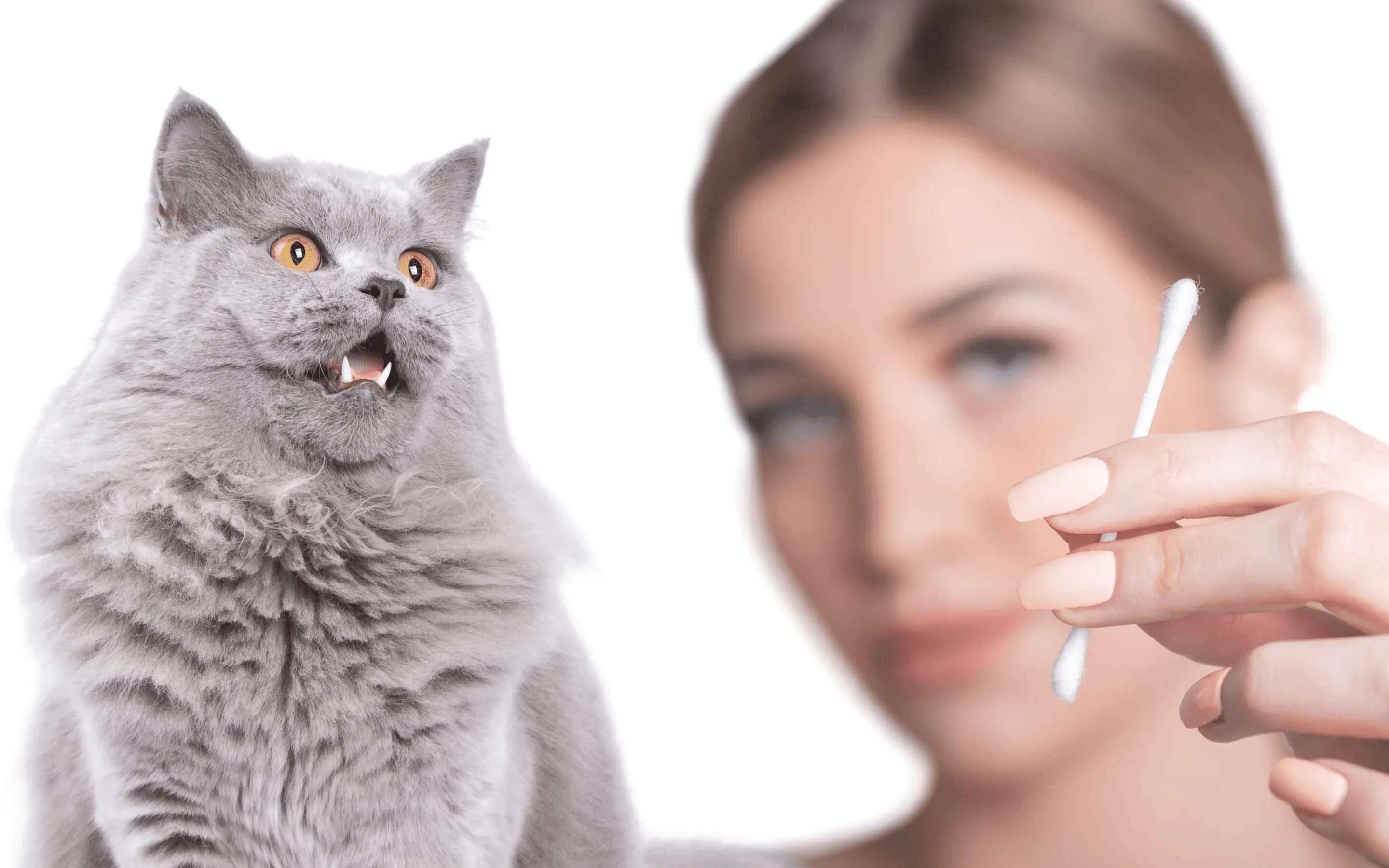
It’s the curse of every cat parent. Instead of the expensive cat toy with rave reviews that your cat won’t even look at, your cat will not stop bothering you the second you grab a fresh Q-tip until you throw it on the floor. The second you give it a Q-tip the cat will juggle, chase, and catch it until they’re exhausted. It’s amazing what a cat can do with their tiny paws and a Q-tip.
It’s a bittersweet feeling to see your cat worked up into a frenzy of excitement, meowing at your and pawing your leg with pupils dilated. All for a cotton swab on a tiny stick of dubious safety.
We’ve all been there.
Cats Like Weird Things
I can’t count the number of times I got a new cat toy only for it to collect dust. But my cat loves Q-tips. She also loves the plastic wrappers that seal supplement bottles. I can peel one off in the distance and my cat will instantly be at my feet looking up in excitement. She also loves wire twists that come with the random USB cables included with most gadgets. She also plays fetch with roasted coffee beans. Most toys, nope, except a cat wand with a fuzzy bug attached to a wire string. It would be a great way to save money but none of these things are truly pet safe and require supervision.
Why Do Cats Like Q-tips In Particular?
In general cats seem to like small objects that have some unexpected movement when they paw it. Q-tips are hard to grasp and move around when cats touch it. It adds a bit of randomness that cats love. Q-tips also catch in weird places and cats love fishing them out and juggling them into another weird spot. It’s a never-ending cycle and cats can keep going until they finally get exhausted or bored.
Why Does My Cat Like Q Tips
Your cat likes Q-Tips because they are fun to play with. They are light, thin, and easy for cats to kick around and pick up. The cotton on each end makes it easier for cats to grab with their claws. Some cats may also be attracted to Q-Tips because they see their owners using them. Playing with Q-Tips can provide entertainment for cats for hours.
Why Is My Cat Obsessed With Used Q Tips?
Cats may be obsessed with used Q-Tips for a few reasons. Firstly, cats are naturally curious creatures and are often attracted to objects that their owners use. As they witness their owners using Q-Tips, they may feel a desire to be involved and mimic their behavior. Additionally, the movement and texture of Q-Tips can be intriguing to cats, making them a fun toy to play with. The lightweight nature of Q-Tips allows cats to easily kick them around and pick them up with their claws, enhancing their appeal as a plaything. It is also important to note that batting around and playing with objects is a normal behavior for cats. The unique shape and texture of Q-Tips may further contribute to their obsession, as they provide a different sensory experience for cats. Overall, cats’ obsession with used Q-Tips can be attributed to their curiosity, the enjoyable play possibilities they offer, and the engaging shape and texture they possess.
Why Do Cats Like the Taste of Earwax?
Cats are known to enjoy the taste of earwax due to several factors. Firstly, earwax contains salt, protein, and fat, which are all appealing to cats. These elements provide a satisfying and flavorful experience for feline taste buds. Additionally, cats have natural urges and instincts that drive their desire for certain tastes and textures, including earwax. Moreover, earwax contains animal proteins produced by the human body, which may further contribute to its appeal. The phenomenon of cats liking earwax is a serious topic among cat owners, as they seek to understand and satisfy their pets’ preferences. Overall, the combination of the taste and nutritional components found in earwax make it a delicacy for some cats.
Are Cotton Buds Safe for Cats?
No, cotton buds, also known as Q-tips, are not safe for cats. Using cotton buds on cats can be dangerous as it can cause injury to their delicate ears. Cats have sensitive ear canals, and inserting cotton buds can push debris further into the ear, leading to potential infections or damage. It is best to consult a veterinarian for proper ear cleaning methods for cats. Veterinarians can recommend safer alternatives, such as specialized ear cleaning solutions, that are specifically designed for cats and will not harm their ears.
Why Does My Cat Eat Cotton Buds?
Cats may be drawn to chew on cotton buds due to their soft and flexible texture. The pleasing sensation provided by the soft cotton tips appeals to cats with an oral fixation. Additionally, cats are often attracted to fluffy-textured objects, making the soft cotton tips of cotton buds appealing to them. Moreover, the scent of their owners on the cotton buds may further attract cats to chew on them. However, it is important to note that cotton buds are not a safe item for cats to chew on and consume. Repeated exposure and chewing of cotton buds could lead to complications in cats down the line. Therefore, it is recommended to avoid this potential hazard and discourage cats from eating cotton buds.
Why Do Cats Like Q Tips
Cats like Q-Tips because they are fun to play with, light and easy to kick around, have cotton ends that are easy to grab with their claws, may have your scent on them, and they may be intrigued by seeing you use them.
Q Tip Cat Toy
Q-tips can be used as a lightweight and thin cat toy that cats can throw, chase, and grab with their teeth or claws. The irregular shape adds to the fun as they tumble across the ground, satisfying a cat’s natural hunting instinct. However, it is not recommended to encourage chewing on Q-tips as there are safer toys made specifically for cats.
Ear Wax, the Secret Ingredient
Nowadays most people know that you shouldn’t clean your ears with Q-tips because it can cause earwax compaction by pushing the earwax deeper into your ear canal. But a lot of people still use them to clean their ears anyway. Q-tips and earwax are a potent combo for cats because cats also love earwax. It’s not just human earwax either. Cats are known to eat their own earwax whenever they clean their own ears. They might even eat another cat’s earwax while helping another cat clean their ears. It’s something about the smell and proteins (dead skin cells, fatty secretions, etc. — yuck) in the earwax that is enticing to the cat.
Many cat owners struggle with this once their cat gets a taste of earwax covered Q-tips. Many have to get a lid for their bathroom garbage bin and keep their Q-tips stashed in a cabinet because if they leave them on the counter near the sink they might never see those Q-tips again. Some owners even stumble across their cat’s stash of dirty and used Q-tips while cleaning the house.
So Are Q-tips Safe for Your Cat?
This is the big question. In general no. Because there’s still a freak chance your cat can swallow a whole Q-tip. If you have cats stay away from the Q-tips with plastic stems because those are the worst. Try to get ones that are organic and made with biodegradable material if you can. Although there are some safety risks, for most cats you can probably let them have their Q-tip with light supervision, especially if they’re not big on chewing the Q-tips. But if you want to be safe, don’t leave Q-tips lying around the house. If your cat nags you for a Q-tip just give them one and throw it away in a secure trash can once they’ve had their fun. As much as your cat loves these things they are not designed for cats and not made of cat safe materials. If your cat swallows a Q-tip you could end up with a medical emergency on your hands so it’s always better to be safe and limit their access.