
Last Updated on January 30, 2023 by admin
Cats flop in front of their owners for a variety of reasons. They may be seeking attention, marking their territory with pheromones, playing, or feeling safe and comfortable. Flopping is a sign of submission, but a cat may still display claws when feeling threatened. Sometimes, cats flop in front of their owners accompanied by purring or stretching to catch their attention. This behavior is usually a sign that the cat feels safe and secure and wants to interact with its owner.
Understanding Your Cat’s Flop
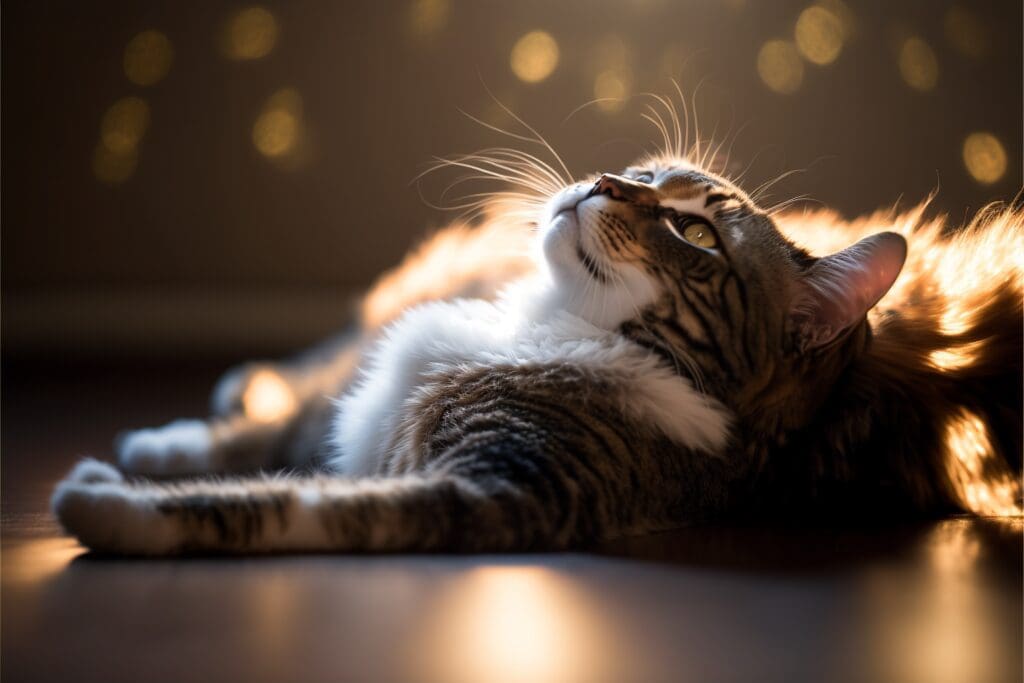
It’s important to understand the body language of your cat when they flop down. Cats will generally lay on their back or side, exposing their belly and looking relaxed. Pay attention to the body posture and the environment around them as this can provide clues as to why they are flopping. Flopping is a normal communicative behavior in cats, and it’s often used as a sign of love and trust. In some cases, cats will flop down to show their appreciation for you. They may also flop down to greet you at the door or to express their desire for attention and playtime. Accompanied by purring and meowing, flopping can be a sign that your cat is relaxed and feeling secure.
Flopping as a Sign of Love and Trust
In addition to being a sign of love and trust, cats often flop when they feel relaxed and secure. When your cat flops in your presence, it is a sign that it is comfortable in your company. It is a sign of appreciation, as if to say thank you for providing a safe environment. Cats may also flop when they want to be petted. They may even choose to lay down on your lap or chest, which is a sign that they are comfortable with you and the situation, and are happy to spend time with you.
The Social Roll
Cats also use the social roll to communicate with other cats and animals. This behavior helps cats establish their hierarchy in the social order, as well as communicate their moods. When a cat rolls over on its back and exposes its stomach, it is saying that it feels relaxed and secure in the presence of other animals. This is why cats will often roll over in front of their owners when they want to be petted — they are showing that they trust you and feel safe around you.
Cats’ Attention-seeking Behaviors
Cats are very social creatures, and they will use various behaviors to get your attention. One of the most common attention-seeking behaviors is the “flop”. Cats will often flop down in front of you, either to get your attention or to show that they trust and love you. While cats often flop to show playfulness or get petted, it could also be a sign that they want something from you. If your cat is engaging in an attention-seeking behavior, the best thing to do is ignore them. This will teach them that their behavior doesn’t have the desired effect and they should try something else.
Flopping as a Sign of Playfulness
It’s not all about wanting attention. Cats also flop down when they’re feeling playful. Flopping can be accompanied by purring and meowing, and is a sign that your cat is relaxed and feeling secure. When your cat flops down, it’s a good sign, although you might want to pick when they want to be petted and when they don’t.
The Ultimate Expression of Trust
When your cat flops down in front of you, it is an ultimate expression of trust. Your cat is exposing its most vulnerable spot, its tummy, and it is showing that it feels safe and secure with you. This is a sign of love and devotion, as cats will only do this when they are relaxed and happy. Cats will also often groom their people, biting gently as a variation on the behavior of adult cats grooming kittens. So if your fluffy friend has flopped at your feet, take it as a sign that they love and trust you!
Greeting You at the Door
Cats also love to flop down in front of you when greeting you at the door. It’s their way of showing that they are happy to see you and are ready for some loving. Your cat may even do a little chirp or meow when they flop down, a sign of enthusiasm and excitement that they get to be around you. It’s an expression of pure joy and love, and your cat will be thrilled if you return the gesture with some petting and love. Next time your cat greets you at the door don’t forget to give them a few scratches behind the ears or along their back as a sign of appreciation.
Accompanied by Purring and Meowing
When cats flop, they often do so accompanied by purring and meowing. This is because cats use these sounds to communicate with humans and other cats. Purring and meowing are both signs of happiness and contentment, so when your cat flops and purrs or meows, it’s a sure sign that they’re feeling relaxed and comfortable in their environment. Kittens mew loudly when they’re hungry or frightened, but once they’ve stopped being dependent on their mother, they also stop this kind of calling behavior. On the other hand, cats usually purr during pleasant experiences such as petting, or cuddling; kittens also purr while drinking milk from their mum. Therefore, if your cat is purring when flopping, it’s a sure sign that they’re feeling happy and contented in your presence.
Relaxed and Feeling Secure
Cats also emit pheromones when they flop, which can help them feel relaxed and secure. These pheromones are released from glands located on their lips, cheeks, chin, and forehead. When your cat flops in front of you, it could be their way of releasing these pheromones and indicating that they feel relaxed and secure around you. In addition to feeling relaxed and secure, cats may also flop down to show that they trust you. When a cat flops in front of you and exposes their belly, it is a sign of trust that they do not feel threatened by your presence.
Picking When They Want to Be Petted
Cats are very particular about when they want to be petted and when they don’t. When they’re feeling particularly affectionate, they’ll flop right down and expose their bellies, inviting you to give them some petting and attention. This is their way of showing that they trust you. If you try to rub your cat’s angelic belly fluff, however, they’ll probably respond with a swat or a hiss. To make sure your cat is comfortable, always watch for subtle signs that she’s okay with being petted such as purring, meowing, and kneading.