
Last Updated on July 29, 2023 by admin
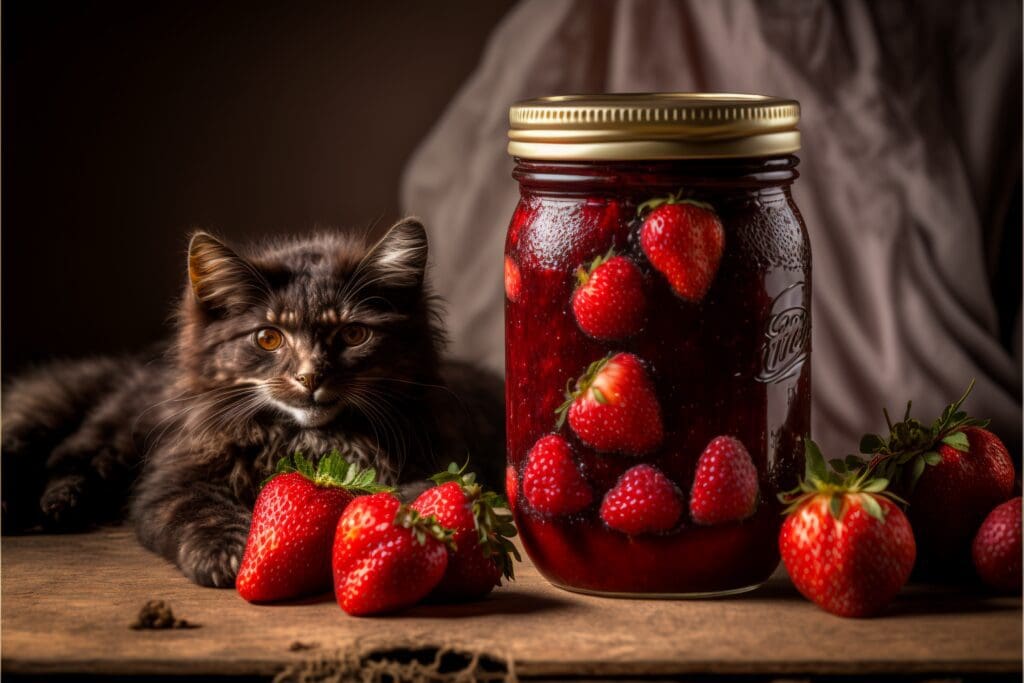
Cats can eat strawberry jam in moderation. However, make sure that the jam does not contain xylitol, an artificial sweetener which is toxic to cats, dogs, and other animals. Additionally, strawberries are high in sugar, so it is best to avoid giving your cat any type of jelly on a regular basis. If you must give your cat some strawberry jam, make sure that it is organic, preservative-free, sugar-free, and fresh. This way, you can ensure that your cat is safe while they enjoy a small treat.
Introduction
In this article we will be discussing the topic of can cats eat strawberry jam. As owners of cats, understand what foods are suitable for our feline friends. We will go through the potential risks and benefits associated with feeding cats strawberry jam, as well as provide some tips on how to introduce it safely into their diet. We will also discuss the nutritional value of strawberries and provide advice on what to look out for when selecting a strawberry jam for your cat. All in all, this blog post will help you make an informed decision when it comes to your cat’s diet and health.
Is It OK for Cats to Eat Jam?
It is generally not recommended to feed jam to cats due to several reasons. Firstly, jam is high in sugar, which can lead to obesity and dental issues in cats. Additionally, cats do not have a natural sweet tooth and may not enjoy the taste of jam. Moreover, jam can cause digestive upset and diarrhea in cats. Some ingredients in jam, such as artificial sweeteners like xylitol, can be toxic to cats. It is important to note that cats have specific dietary needs and should primarily be fed a balanced cat food diet. However, if you still want to offer jam to your cat, it should be done sparingly and in small amounts as an occasional treat. It is also worth mentioning that strawberry jam is not necessarily better for a cat’s health compared to other types of jam, as the high sugar content remains a concern regardless of the flavor.
Can Cats Eat Strawberry Flavor?
No, cats should not consume strawberry flavor or products that contain artificial strawberry flavor. While strawberries themselves are generally safe for cats to eat in small amounts as an occasional treat, strawberry flavorings often contain additives or ingredients that can be harmful to cats. Cats are obligate carnivores, meaning their diet should primarily consist of meat, and incorporating artificial strawberry flavor into their diet can disrupt their nutritional balance. It’s important to prioritize a balanced and appropriate cat diet that meets their dietary needs, and avoid introducing unnecessary flavorings or additives that could potentially be harmful to their health.
Why Can’t Cats Eat Strawberries?
Cats cannot eat strawberries because their bodies are designed to primarily consume meat as obligate carnivores. Strawberries are not a natural part of a cat’s diet and do not provide essential nutrients that cats need. Additionally, cats lack the necessary enzymes to break down and digest the sugars found in strawberries. Feeding strawberries to cats can result in digestive upset, including diarrhea and vomiting. Moreover, the small size of strawberries poses a choking hazard for cats, as they can potentially get stuck in their throat. Some cats may also have allergies or sensitivities to strawberries, which can lead to allergic reactions or skin irritations. Therefore, it is crucial to consult with a veterinarian before introducing any new food, like strawberries, into a cat’s diet to ensure their health and well-being.
Can Cats Eat Bread With Jam?
No, cats should not be fed bread with jam. Jam contains high amounts of sugar, which can be harmful to cats. Additionally, cats do not have the necessary enzymes to properly digest bread and jam. Feeding bread with jam to cats can lead to digestive issues, such as upset stomach or diarrhea. Moreover, it can contribute to weight gain and obesity in cats. Therefore, it is best to stick to a balanced and appropriate diet for cats, which includes specially formulated cat food.
Nutritional Value of Strawberries
Strawberries are a nutrient-dense food that can provide cats with many health benefits. They contain a high amount of antioxidants, Vitamin C, and dietary fiber, which can help to support a healthy immune system and digestive system. In addition, strawberries contain natural sugar, but in moderation, it can help satisfy a cat’s sweet tooth without the risks associated with processed sugars. Overall, strawberries can be a nutritious snack for cats if given in moderation.
Can Cats Have Strawberry Jam?
Cats can have strawberry jam in moderation, although it is not recommended as a regular treat or meal for cats due to its high sugar content. Note that jelly made from grapes is toxic to cats, so you should avoid giving your cat any jelly that contains grapes. Cats can generally benefit from the nutritional benefits of strawberries, including vitamin C and antioxidants. However, make sure that the jam you give your cat does not contain any artificial sweeteners like xylitol which can be toxic to cats and other animals. As with all treats, it is best to introduce strawberry jam in moderation and provide fresh water for your cat at all times.
Are There Risks Involved?
Though they are not known to be poisonous, there are still some risks associated with feeding cats strawberry jam. High amounts of sugar can lead to obesity, tooth decay, and diabetes in cats. Additionally, cats who eat too much jam may experience pancreatitis or digestive issues. For these reasons, it is best to limit the amount of jam your cat eats and introduce it slowly into their diet. It is also important to ensure that your cat does not have access to sugar-free jams, as they often contain artificial sweeteners which can be toxic to cats.
What Should You Look Out For?
When it comes to giving your cat strawberry jam, there are some important things to look out for. Firstly, you should always check the label to make sure that the jam does not contain any artificial sweeteners like xylitol which can be toxic for cats. Secondly, you should make sure that the strawberry jam is of a high quality, organic and preservative-free. Lastly, you should be mindful of how much strawberry jam you give your cat. Moderation is key when it comes to this treat as too much sugar can have negative effects on your cat’s health.
How Much Jam Is Safe for Cats?
Remember that giving your cat too much jam can have serious consequences. While it is generally safe for cats to have small amounts of strawberry jam, owners should be careful not to give too much. When introducing jam to a cat’s diet, it is best to start with very small amounts and monitor how the cat responds. Generally, a teaspoon of jam is more than enough for an average sized cat. If your cat appears to enjoy the taste of the jam, it is okay to give a little bit more. However, it is still important to limit the amount of jam your cat eats in order to avoid potential health problems.
What About Sugar-free Jams?
When it comes to sugar-free jams, there is a bit of debate as to whether or not cats should consume them. While sugar-free jams may seem like a healthier option for cats, they often contain xylitol which can be toxic for cats. Therefore, be aware of the ingredients in the jam and avoid any that contain xylitol. While there is a slight chance that your cat may enjoy the taste of sugar-free jams, it is best to avoid feeding these to your cat altogether.
Can Diabetic Cats Eat Jam?
Diabetic cats should avoid eating jam, as it is high in sugar. While strawberry itself is not toxic to cats, the added sugar in most jams can be a problem for cats with diabetes. Ingesting too much sugar can spike your cat’s blood sugar levels, leading to health problems. However, if your cat must have a treat, you can look for sugar-free organic jam. These jams are usually made with natural sweeteners such as stevia or erythritol and are safe for cats with diabetes. If you want to introduce jam to your diabetic cat’s diet, start with a tiny amount and monitor their reaction to it. If they don’t seem to have any adverse effects, it’s usually safe to give them a small amount every now and then as a treat.
Conclusion
In conclusion, cats should not be given strawberry jam as part of their diet. Although technically it is not toxic to cats, it does contain large amounts of sugar and sweeteners that can cause health issues for our feline friends. Even sugar-free jams are not recommended as they are still likely to contain unhealthy ingredients. If you must give your cat strawberry jam, be sure to choose a preservative-free, sugar-free, and organic variety that is made of fresh strawberries. Remember to also only give them a small amount, as too much can cause damage to their digestive system.