
Last Updated on January 8, 2023 by admin
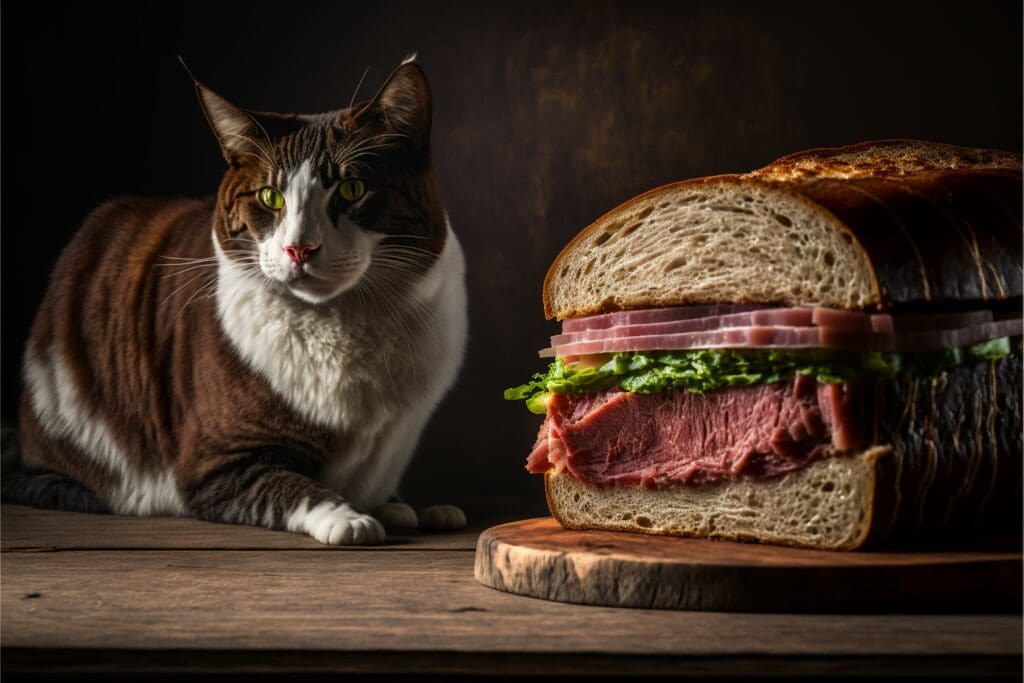
Cats can eat pastrami, but it is not recommended as a regular part of their diet. Pastrami is a type of cured and smoked beef that is typically served sliced and on sandwiches. It is generally not good for cats to eat processed meats, as they are high in sodium and other unhealthy additives. However, cats can enjoy the occasional bite of pastrami as long as it is not smoked, cured with sugar or high in salt. As cats are carnivores, they need meat in their diet to survive, so it can be beneficial to give them a small portion of deli meat from time to time to meet their nutritional needs.
What Is Pastrami?
Pastrami is a type of cured and smoked beef that is usually served sliced and on sandwiches. It is usually made from a cut of beef, such as brisket or other fatty cuts of meat. The beef is brined with herbs and spices, then smoked, cured and dried. The end result is a savory and salty meat that can be an enjoyable snack for humans, but cats should avoid it.
Are There Nutritional Benefits to Eating Pastrami?
While we may enjoy the flavor and taste of pastrami, cats have no nutritional need for the meat. In fact, pastrami is not recommended for cats due to its high sodium content, as well as its cured and smoked ingredients that can be toxic for cats. The meats are also high in fat and calories, which can contribute to weight gain. So if you’re looking to give your cat a healthy treat, pastrami is not the best option.
Is Pastrami Safe for Cats to Eat?
While cats can eat pastrami, it is not the healthiest choice for them. Pastrami is a processed meat that is cured and smoked, which means it contains nitrates, sugar, and sodium—all of which can be dangerous to cats. While adult cats may be able to survive after eating a small amount of pastrami, kittens should not be given pastrami even in small quantities. As an alternative, you can give your cats deli meats that are not smoked, cured with sugar or high in salt. These hand-carved deli meats include pastrami, corned beef, brisket, turkey, and tongue. To ensure your cat’s safety, defrost the meat overnight in the refrigerator and do not remove it from its plastic packaging.
What Are the Risks of Feeding Pastrami to Cats?
Though cats can eat pastrami, it’s important to understand the risks involved. Pastrami is high in sodium which can be dangerous to cats in large quantities. It also contains ingredients that can be toxic to cats, such as herbs and spices used during the brining process. As a result, it’s not advisable to feed your cat large amounts of pastrami. Additionally, it’s not a comfortable meat for cats to chew on since it is essentially cured and smoked beef jerky. Therefore, it’s best to avoid feeding your cat pastrami altogether and opt for healthier meats instead.
What Are Some Alternatives to Feeding Pastrami to Cats?
Fortunately, there are plenty of alternative foods that you can give to your cat that provide them with the nutrition they need without the potential risks of pastrami. Hand-carved deli meats like corned beef, brisket, turkey and tongue are all healthy options for cats. However, make sure you defrost the meat overnight in the refrigerator and do not remove it from the plastic packaging. Also, avoid giving your cat smoked meats as these contain nitrates which can be toxic for cats. If you want to provide your cat with a natural treat, try giving them some fresh vegetables or fruits that are safe for cats to eat.
What Other Foods Should I Avoid Feeding My Cat?
It is important to remember that cats are carnivores and need a large amount of protein in their diets. As such, it’s important to be mindful of what you feed your cat. Avoid giving cats processed meats such as pastrami, bacon, sausage and hot dogs, as these meats contain large amounts of salt and preservatives which can be harmful to a cat’s health. Additionally, smoked meats such as pastrami contain nitrates which can be toxic to cats. You should also avoid feeding your cat anything sweetened with sugar or artificial sweeteners.
Are There Any Natural Treats That I Can Give My Cat Instead of Pastrami?
Fortunately, there are plenty of healthy treats you can give your cat instead of pastrami. Hand-carved deli meats such as pastrami, corned beef, brisket, turkey and tongue can be defrosted overnight in the refrigerator and given to cats in proper portion sizes. If you want to make sure your cat is getting all of their nutritional needs from their food, you should avoid smoked meats and cured meats with sugar or high amounts of salt. Natural treats like fresh cooked salmon, tuna and mackerel are also great sources of protein for cats.