
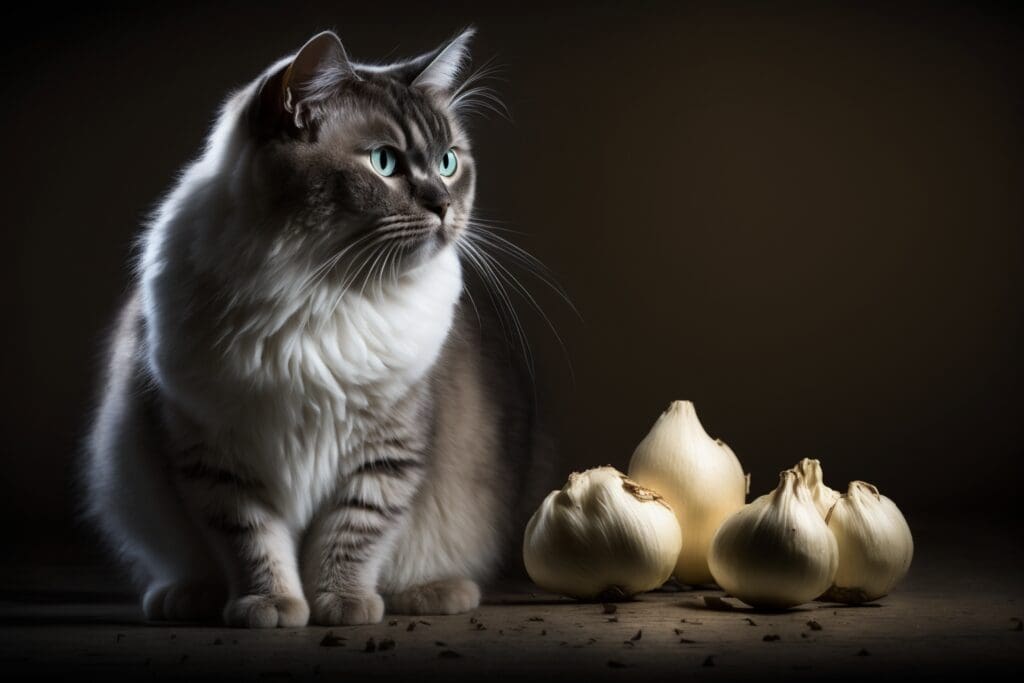
Last Updated on August 9, 2023 by admin
Cats should not eat garlic as it is toxic and can cause hemolytic anemia, organ damage, organ failure, or death. Garlic contains toxic compounds such as thiosulfate and is five times more toxic than onions for cats.
Garlic Toxicity in Cats
Garlic is toxic to cats, and can cause serious health problems if ingested. The primary toxic property in garlic is n-propyl disulfide, found in active form in all vegetables of the Allium spp family. Ingesting garlic can cause gastrointestinal upset and may even lead to anemia or other more severe medical issues. Be aware of the presence of garlic in food and to avoid giving your cat any food containing garlic, whether it be a small dash of garlic powder or meals made with cloves or whole. Additionally, cats should never be given garlic sauce, food cooked with garlic, or meat cooked with garlic. Even a small amount of garlic can be harmful to cats, so it is best to err on the side of caution and avoid giving them any food that contains this ingredient. If your cat has ingested garlic, seek veterinary attention immediately in order to prevent any potential health problems.
Is a Little Garlic OK for Cats?
While it is true that garlic intake in small amounts may not pose a great danger to cats, even a minimal amount like a sprinkle of garlic powder can still have a damaging effect on them. It is best to err on the side of caution and keep cats completely away from garlic to ensure their safety. While cats can technically consume garlic in very minimal amounts, it is not recommended. The potential harm that garlic can cause to cats outweighs any potential benefits, making it crucial to prevent cats from eating garlic altogether.
Can Cats Eat Cooked Garlic?
No, cats should not consume cooked garlic. Garlic contains compounds, such as thiosulphate, that can be toxic to cats. Ingesting cooked garlic can lead to anemia and other health problems in cats. It is important to keep garlic and any foods that contain garlic away from cats to ensure their well-being. If you are preparing food for your cat, it is crucial to avoid using garlic as an ingredient to prevent any potential harm.
Cats Onion Powder
Cats should never consume onion powder as it can be highly toxic to them. Onion powder is significantly more potent than fresh onions and contains a higher concentration of thiosulfate, which is the toxic compound for cats. Even a small amount of onion powder can be dangerous and potentially harmful to cats. It is important to note that cats cannot metabolize thiosulfate effectively, making it even more detrimental to their health. Onion powder should not be added to cat food or any food that is tempting to cats, as it can be easily disguised and ingested in large quantities. It is crucial to keep onion powder away from cats to ensure their well-being.
Are Cloves Poisonous to Cats
Yes, cloves are poisonous to cats. They contain eugenol, a chemical substance that is toxic to cats. Ingesting cloves in any form, such as through chewing or consuming products that contain cloves, can be dangerous for cats. This is because cloves can cause liver toxicity in cats. Furthermore, even inhaling eugenol can lead to respiratory and other serious problems in cats. Therefore, it is important to keep cloves and any products containing cloves out of the reach of cats to prevent potential poisoning and ensure their safety.
Garlic for Cats Safe
No, garlic is not safe for cats. In fact, it is highly toxic to them and can cause serious damage to their red blood cells. Garlic, along with other members of the allium family such as onions, chives, leeks, and shallots, contains substances like disulfides and thiosulphates that can be harmful to cats. In comparison to onions, garlic is five times more toxic to cats. Feeding cats garlic or any other allium vegetables should be avoided to ensure their health and well-being. It is crucial to practice secure food storage and be aware of ingredients to prevent cats from being exposed to garlic. Keeping potentially harmful foods, including garlic, out of reach of cats is essential for their safety. By prioritizing a cat’s health and avoiding garlic, owners can play a significant role in keeping their furry friends healthy and happy.
Garlic Poisoning
Garlic poisoning is a condition that can be diagnosed by considering various factors, including the patient’s history, clinical signs, and microscopic examination of a blood sample. The toxic compound responsible for garlic poisoning, sodium n-propyl thiosulfate, causes specific structural damage to red blood cells, which can be observed under a microscope. Surprisingly, even a small amount of garlic, such as a clove or a pinch of garlic powder, can lead to garlic toxicity or poisoning. Symptoms of garlic poisoning may include difficulty breathing, pale gums, drooling, increased heart rate, and in severe cases, organ failure. Additionally, garlic poisoning can result in gastroenteritis, with symptoms like nausea, oral irritation, drooling, abdominal pain, vomiting, and diarrhea. Furthermore, garlic poisoning can cause oxidative damage to red blood cells, leading to their rupture and subsequent symptoms of anemia, such as lethargy, pale gums, elevated heart rate, and increased respiratory rate. It is crucial to be aware of these symptoms and seek immediate veterinary care if garlic poisoning is suspected.
Cat Licked Onion Powder
If a cat has accidentally licked onion powder, it is important to monitor for any signs of illness and take appropriate action if necessary. Onion powder can be harmful to cats, as they are more sensitive to onions than other animals. While it takes a larger quantity of onion powder to pose a problem for cats, it can still cause anemia, which can lead to symptoms such as weakness, lethargy, and pale gums. Therefore, it is best to avoid feeding cats any food that contains onion powder. If a cat has ingested a small amount of onion powder, closely observe their behavior and health. If any concerning symptoms arise, it is crucial to consult a veterinarian for further guidance and potential treatment.
Can Cats Have Onion Powder
No, cats cannot have onion powder. Onion powder is dehydrated onion and can be more toxic than raw or cooked onion. It can be added in large quantities to food as a seasoning, making it a greater risk for cats. Additionally, onion powder is easy to disguise in foods that are tempting to cats. Onions are dangerous for cats due to the presence of a compound called N-propyl disulfide, which can cause oxidative damage to red blood cells and lead to anemia. Consumption of onions, including onion powder, can also cause gastrointestinal upset, such as vomiting and diarrhea, in cats. Therefore, it is best to avoid feeding cats any form of onion, including onion powder and cooked onions, in order to ensure their safety and well-being.
Can Cats Eat Garlic Bread
No, cats should not eat garlic bread as it contains garlic, which is toxic to them. Garlic contains thiosulphate, a toxin that is difficult for cats to digest and can accumulate in their system over time, making them sick. It is advised to keep cats away from anything made with garlic, onion, chives, and leeks as they all contain thiosulphate. These substances can cause damage to a cat’s red blood cells, leading to anemia. Therefore, it is important to keep garlic bread and any other foods containing garlic away from cats to prevent them from getting sick. If you have any concerns about flea repellents, whether natural or artificial, it is always best to consult a veterinarian to ensure they are safe for cats.
Onion Powder Cats
Onion powder is highly toxic to cats, even in small amounts, as it is much more potent than an actual onion. To put it into perspective, just one medium onion, weighing approximately ½ pound or 226 grams, is equivalent to 1 tablespoon of onion powder. If a cat ingests onion powder, it can lead to onion poisoning, which manifests through symptoms such as vomiting, diarrhea, weakness, pale gums, and an increased heart rate. The toxic compounds found in onions, specifically N-propyl disulfide and thiosulphate, can cause damage to a cat’s red blood cells and result in anemia. Therefore, it is crucial to keep all forms of onions, including onion powder, away from cats to prevent any potential poisoning incidents.
Can Cats Eat Cooked Garlic and Onion?
No, cats should not consume cooked onions or garlic. Both onions and garlic belong to the Allium family, which contains compounds that can be toxic to cats. These compounds can cause damage to a cat’s red blood cells, leading to anemia. It is important to note that cooking does not affect the toxicity of these compounds, so even cooked forms of onions and garlic should be avoided. This includes onion powder, as it contains the same toxic compounds as fresh onions. It is always best to consult with a veterinarian before introducing any new food to a cat’s diet. While tomatoes, whether cooked or raw, are generally safe for cats to consume in small amounts, it is still recommended to seek professional advice to ensure the overall well-being of the cat.
Is Garlic and Onion Bad for Cats
Yes, garlic and onions are indeed bad for cats. Both garlic and onions belong to the Allium genus and contain organosulfoxides, which can be toxic to cats. These compounds react with red blood cell membranes in cats, leading to cell lysis and the potential development of anemia. Not only garlic and onions, but also other Allium family plants such as chives, scallions, shallots, and leeks can be harmful to cats. Regular consumption of these plants in any form can result in serious digestive issues, poisoning, and dehydration for cats. Therefore, it is crucial to keep all forms of garlic and onions away from cats to ensure their well-being and health.
Can Cats Have Garlic Bread
No, cats should not be given garlic bread. Garlic bread is toxic to cats and can be harmful to their health. Garlic contains compounds that can damage a cat’s red blood cells, leading to anemia. Additionally, cats lack the necessary enzymes to properly digest garlic and other Allium plants. If a cat consumes garlic bread, it can cause symptoms such as vomiting, diarrhea, abdominal pain, and lethargy. Therefore, it is crucial to keep garlic bread and any other foods containing garlic away from cats to prevent potential health risks.
Is Smelling Onions Bad for Cats
Yes, smelling onions can be harmful to cats. Onions contain compounds called thiosulphates, which are toxic to cats. Cats have a higher sensitivity to thiosulphates compared to humans. Ingesting or even just smelling onions can lead to a condition called onion toxicity in cats. This toxicity can cause damage to a cat’s red blood cells, leading to anemia. Symptoms of onion toxicity in cats may include weakness, vomiting, diarrhea, pale gums, and increased heart rate. Therefore, it is crucial to keep onions and onion-containing foods away from cats to prevent potential harm.
Onion Toxicity in Cats Symptoms
Onion toxicity in cats can lead to a range of symptoms. The most commonly reported signs include vomiting, diarrhea, and lethargy. Other initial non-specific signs may include nausea, drooling, oral irritation, and abdominal pain. Gastrointestinal distress, such as loss of appetite, further vomiting, and diarrhea, can also occur. Additionally, onion poisoning can cause anemia-like symptoms like paleness or yellowing of the gums and skin, panting, allergic reactions, and contact dermatitis. It is important to note that onion poisoning can lead to various types of anemia, including hemolytic anemia, Heinz body anemia, and methemoglobinemia in cats. Excessive drooling, weakness, and lethargy, as well as diarrhea and vomiting, are common symptoms of onion and garlic poisoning in cats. Other concerning signs may include rapid and shallow breathing, seizures, lack of appetite, and diarrhea. If any of these symptoms are observed in a cat, it is crucial to seek immediate veterinary attention.
Cat Licked Garlic Powder
If a cat has licked garlic powder, it is important to take immediate action as garlic is toxic to cats. Even small amounts of garlic can cause serious health issues such as anemia and damage to red blood cells. While cats may be attracted to the smell or taste of garlic, it should never be given to them. It is crucial to keep all forms of garlic, including garlic powder, away from cats. If a cat accidentally ingests garlic, it is recommended to contact a veterinarian immediately for guidance and potential treatment. Time is of the essence in such situations to ensure the cat’s well-being and prevent any further complications.
How Much Garlic Is Poisonous to Cats
Even a small amount of garlic, such as one piece or 197 mg of garlic powder, can be toxic to cats. The toxicity of garlic to cats is influenced by factors such as body weight, breed, and the cat’s medical history. It is important to note that certain cat breeds, including Siamese, Burmese, Japanese, and Singapura, are more susceptible to garlic poisoning. Therefore, it is crucial to avoid feeding any amount of garlic to cats, as even a small quantity can have harmful effects on their health.
How Much Garlic Can Kill a Cat
Even a small amount of garlic can be enough to cause severe toxicity in cats. Less than one small glove of garlic, which weighs about 4-7 grams, can be deadly for an average-size cat weighing 10-12 pounds. To put it into perspective, less than 1/2 teaspoon of minced garlic or less than 1/8 teaspoon of garlic powder can be toxic to cats. In fact, even the tiniest bit of garlic, such as one piece or just 197 mg of garlic powder, can lead to poisoning in cats. The level of toxicity varies depending on factors like the cat’s body weight, breed, and medical history. Certain breeds, including Siamese, Burmese, Japanese, and Singapura, are particularly susceptible to the harmful effects of garlic. It is crucial to keep garlic away from cats to prevent any potential harm.
What Does Garlic Do to Cats
Garlic is toxic to cats and should never be included in their diet. Cats have a strong sense of smell and may become agitated or stressed when exposed to strong odors like garlic. Some cat owners mistakenly believe that feeding garlic to their cats can prevent heart disease and fleas, but this is a myth. Garlic is a member of the Allium family and is commonly used to add flavor to human food. While garlic does have some health properties and can aid in flea prevention, it is still poisonous to cats and should be avoided. In summary, garlic should never be given to cats as it can be harmful to their health and well-being.
Can You Give Garlic to Cats
No, garlic should never be given to cats. Garlic is toxic to cats and should never be included in their diet. While some cat owners mistakenly believe that garlic can prevent heart disease and fleas in cats, this is not true. Ingesting garlic is usually the result of owners sharing their garlic-covered food with their pets. While a small amount of garlic is unlikely to cause significant harm, a significant amount can be problematic. It is important to note that garlic belongs to the Allium family and is commonly used to add flavor to human food, but it should never be given to cats due to its toxicity.
Is Cooked Garlic Bad for Cats
Yes, cooked garlic is bad for cats. In fact, garlic, in any form (raw, cooked, or powdered), is not recommended for cats. While small amounts of garlic may not cause immediate harm, it is best to avoid feeding garlic to cats altogether. This is because garlic is toxic to cats and can be very dangerous for them to consume. This includes cooked garlic cloves as well as jarred minced garlic. Therefore, it is important to ensure that cats do not have access to any form of garlic to keep them safe and healthy.
How Much Garlic Can a Cat Eat
A cat should not consume any amount of garlic as it can be harmful to their health. Even a small amount, such as less than one small glove of garlic (about 4–7 grams) in an average-size cat (10–12 pounds), can result in severe toxicity. To put it in perspective, less than 1/2 teaspoon of minced garlic or less than 1/8 teaspoon of garlic powder can be toxic to cats. Therefore, it is crucial to prevent cats from ingesting any garlic to ensure their well-being.
Is Garlic Good for Cats
Garlic is not good for cats and can be harmful or even dangerous to their health. Garlic belongs to the Allium plant family, which also includes onions, scallions, shallots, chives, and leeks. Allium plants contain organic sulfur compounds that can cause oxidative damage to cats. While garlic may have some potential benefits for humans, it is best to avoid giving it to cats. Instead, probiotics can provide similar benefits to garlic for cats, helping maintain a healthy digestive system and boosting the immune system. Additionally, herbs like parsley, basil, or oregano can offer similar advantages to garlic without the harmful effects. Ginger is another excellent alternative to garlic, as it aids digestion and reduces inflammation. If your cat has been exposed to garlic, it is crucial to inform your veterinarian as soon as possible. They may recommend blood tests to check for signs of anemia or other health issues related to garlic toxicity. Treatment for garlic toxicity in cats may include supportive care, such as fluid therapy, and medication to address any symptoms. Therefore, it is best to avoid giving garlic to cats and opt for safer alternatives.
How Long Does Garlic Poisoning Last in Cats
The duration of garlic poisoning in cats can vary, and symptoms may take 2 to 4 days to manifest. However, it is important to note that symptoms of garlic poisoning may not appear immediately and can take up to 24 hours to develop. The duration of the poisoning can also depend on the severity of the poisoning and the individual cat’s response to treatment. Prompt medical help is crucial in these cases to prevent potentially fatal complications. Therefore, the length of garlic poisoning in cats can be influenced by various factors, and it is essential to seek veterinary assistance as soon as possible.
Is Garlic Powder Toxic to Cats
Yes, garlic powder is toxic to cats. Even in small amounts, a single clove of garlic or 197 milligrammes of garlic powder can lead to poisoning in cats. The level of toxicity can vary depending on the cat’s weight, breed, and prior conditions. Certain cat breeds, such as Siamese, Burmese, Singapura, Turkish Angora, Oriental Shorthair, and Japanese Bobtail, are particularly sensitive to garlic poisoning. It is not just dried garlic and garlic salts that can be harmful to cats, but the thiosulphate content in these forms can be higher than that of garlic powder. Ingesting garlic powder on a daily basis can be dangerous for cats over time, and even a small amount of garlic powder can have an effect. Therefore, if you suspect that your cat has consumed garlic, it is crucial to seek immediate veterinary attention.
Symptoms of Garlic Poisoning in Cats
Symptoms of garlic poisoning in cats can vary depending on the amount consumed and the size of the cat. Common signs of garlic poisoning in cats include vomiting, diarrhea, abdominal pain, loss of appetite, lethargy, pale gums, and weakness. In severe cases, cats may experience red blood cell damage and anemia. It is important to note that symptoms of garlic poisoning may not manifest immediately and can take as long as 4 days to 1 week after ingestion. Other symptoms to look out for include ataxia or lack of muscle coordination and abdominal discomfort. If you suspect garlic poisoning in your cat, monitor them closely for signs of toxicity and seek veterinary care immediately if symptoms such as vomiting, diarrhea, lethargy, pale gums, and decreased appetite occur.
Cats Eat Garlic
No, cats should not eat garlic. Cats are more susceptible to the effects of garlic than dogs, and consumption of garlic can have serious consequences for their health. Garlic can cause gastrointestinal upset in cats and alter their red blood cells, interfering with their function of transporting oxygen in the body. This can lead to anemia, which can be fatal for cats. Even a small amount of garlic can be highly concentrated and potentially toxic for cats, and those who consume less than half a clove of garlic may become ill. Therefore, it is important to keep garlic and any products containing garlic away from cats to ensure their well-being.
Is Onion Powder Bad for Cats
Onion powder is indeed bad for cats. While raw or cooked onions can be harmful to felines, onion powder is even more toxic. It can be added in large quantities to food as a seasoning, thereby increasing the risk for cats. What makes it particularly dangerous is that onion powder is easy to disguise in foods that are tempting to cats, making it difficult for owners to detect its presence. The exact amount of onion that is toxic to cats is not specified, but even small amounts can be harmful. If ingested, onion powder can cause symptoms such as vomiting, diarrhea, weakness, pale gums, and an increased heart rate in cats. In severe cases, it can lead to anemia and damage to red blood cells. To avoid potential health risks, it is best to steer clear of feeding cats any form of onion, including onion powder.
Why Is Garlic Bad for Cats
Garlic is bad for cats because it belongs to the Allium plant family, which contains organic sulfur compounds that can cause oxidative damage to cats. These compounds can lead to stomach upset and, more importantly, severe damage to red blood cells, resulting in life-threatening anemia. Cats suffering from anemia may exhibit symptoms such as lethargy, pale gums, rapid breathing, and potential collapse. Additionally, cats have a strong sense of smell and may find the smell of garlic overwhelming and unpleasant, causing stress and agitation. Therefore, it is crucial to avoid feeding cats any food containing garlic to prevent these detrimental effects.
Can Cats Eat Garlic Powder
No, cats cannot eat garlic powder. Garlic powder is toxic to cats, even in small quantities, due to its concentrated nature. Consuming garlic powder can damage a cat’s red blood cells and cause anemia. This is because garlic powder contains compounds, such as allicin, that are poisonous to cats. It’s not just garlic powder that is harmful; dried garlic, garlic salts, and other forms of garlic can also be dangerous for cats. In fact, these forms of garlic can contain even higher levels of thiosulphate, a toxic compound, than garlic powder. Therefore, it is crucial to keep cats away from garlic and its various forms to prevent any harm or potential health issues.
Is Garlic Bad for Cats
Yes, garlic is indeed bad for cats. It belongs to the Allium plant family, which also includes onions, scallions, shallots, chives, and leeks. Allium plants contain organic sulfur compounds that can cause oxidative damage to cats. When consumed, garlic can lead to stomach upset and severe damage to red blood cells in cats. This damage can result in life-threatening anemia, characterized by symptoms such as lethargy, pale gums, rapid breathing, and potential collapse. Therefore, it is crucial to prevent cats from consuming garlic or any other Allium plants to ensure their well-being and avoid potentially harmful consequences.
Cat Eats Garlic
If a cat eats garlic, even in small amounts, it can become ill. Consuming less than half a clove of garlic can make a cat sick, while eating enough garlic can lead to garlic poisoning. Garlic poisoning in cats can cause a condition called hemolytic anemia, where the cat’s body attacks its own red blood cells. Cats are more susceptible to the effects of garlic than dogs. Garlic can cause gastrointestinal upset in cats and interfere with the function of red blood cells. Anemia caused by garlic poisoning can be a potentially fatal illness for cats. Therefore, it is crucial to ensure that cats are kept away from garlic and any products containing garlic to prevent them from becoming sick.
Garlic in Cats
Garlic is toxic to cats and should never be included in their diet. Cats have a strong sense of smell and may become agitated or stressed when exposed to strong odors like garlic. While some cat owners may believe that garlic has medicinal benefits, there is no scientific evidence to support this claim. In fact, garlic can cause anemia in cats, leading to symptoms such as weakness, pale gums, and loss of appetite. If you suspect that your cat has ingested garlic, it is crucial to seek immediate veterinary care. It is important to strictly adhere to the fact that garlic should never be given to cats due to its toxic nature and potential harmful effects on their health.
Is Garlic Sauce Bad for Cats
Yes, garlic sauce is bad for cats to consume. Cats should not be given garlic sauce as it can lead to various health problems including stomach pain and gastrointestinal irritation. Garlic, along with ingredients like onion, oregano, basil, and pepper, commonly found in store-bought or homemade sauces, are toxic to cats. If a cat shows symptoms such as excessive salivation, lethargy, panting, or dilated pupils after consuming garlic sauce, it is crucial to seek veterinary attention. Therefore, it is best to avoid feeding cats garlic sauce to prevent potential health risks.
Garlic for Cats
Garlic should never be included in a cat’s diet as it is toxic to them. Despite some cat owners believing in its medicinal benefits, such as preventing heart disease and fleas, the risks outweigh any potential advantages. Instead, cat owners should consider incorporating probiotics into their cat’s diet to maintain a healthy digestive system and boost their immune system. Additionally, herbs like parsley, basil, or oregano can provide similar benefits to garlic without the harmful effects. For those looking for alternatives to garlic, ginger is an excellent choice as it aids digestion and reduces inflammation. Overall, while garlic may have perceived benefits, it is important to prioritize the health and safety of our feline companions by avoiding its inclusion in their diet.
Can Garlic Kill a Cat
Garlic can potentially be fatal to cats. While cats are more susceptible to the effects of garlic than dogs, even a small amount of garlic can cause significant damage to a cat’s health. Garlic ingestion can lead to gastrointestinal upset and interfere with the important function of transporting oxygen in a cat’s body. This can result in anemia, which can be life-threatening. Most garlic ingestion in cats occurs when owners share their garlic-covered food with their pets. Therefore, it is crucial for cat owners to avoid feeding their cats any food containing garlic to prevent potential harm and ensure their well-being.
Will Garlic Kill a Cat
Yes, garlic can be toxic to cats and has the potential to cause severe harm or even death. Cats are more susceptible to the negative effects of garlic compared to dogs. Ingesting garlic can lead to gastrointestinal upset and can also alter the red blood cells, interfering with their ability to transport oxygen throughout the body. Anemia, a potentially fatal illness, can result from the consumption of garlic by cats. If you suspect that your cat has consumed garlic, it is crucial to seek immediate veterinary attention. Treatment may include inducing vomiting, administering activated charcoal, and providing intravenous fluids. It is essential to adhere to these facts and not deviate from them when considering the potential dangers of garlic for cats.
Can Cats Have Garlic?
No, cats should not have garlic as it is toxic to them. Garlic contains compounds called thiosulphates that can cause damage to a cat’s red blood cells. This can lead to a condition called Heinz body anemia. Symptoms of garlic poisoning in cats may include vomiting, diarrhea, weakness, and pale gums. It is crucial to keep garlic and any food containing garlic away from cats to prevent potential harm. Therefore, it is best to avoid feeding cats any form of garlic to ensure their well-being and avoid any negative health consequences.
Garlic Cats Safe
No, garlic is not safe for cats. Garlic is a member of the allium family, which includes onions, chives, leeks, and shallots, all of which are highly toxic to cats. Among all the allium vegetables, garlic is the most dangerous for cats, being five times more toxic than onions. This is because garlic contains disulfides and thiosulphates, which can destroy a cat’s red blood cells. Feeding cats garlic can lead to anemia and other serious health issues. Therefore, it is crucial to avoid feeding cats garlic and instead use safe seasonings and ingredients that are not harmful to their health.
Garlic Powder for Cats
Garlic powder is extremely toxic to cats and should never be given to them. Even a small amount of garlic powder can lead to poisoning in cats, and the severity of the toxicity can vary depending on the cat’s weight, breed, and prior health conditions. Certain cat breeds, including Siamese, Burmese, Singapura, Turkish Angora, Oriental Shorthair, and Japanese Bobtail, are particularly sensitive to garlic poisoning. It’s not just fresh garlic that is harmful to cats, but also dried garlic, garlic salts, and garlic seasoning mixes. In fact, these forms of garlic can have even higher levels of thiosulphate, which is the toxic component, than garlic powder. Therefore, it is crucial to keep cats away from all forms of garlic to prevent poisoning and ensure their well-being.
Will Onions Hurt Cats
Yes, onions can be harmful to cats. Onions contain a toxic component called N-propyl disulfide, which can cause damage to a cat’s red blood cells. This can lead to anemia in cats. The toxicity of onions affects cats whether they are consumed raw, cooked, or in powdered form. Symptoms of onion toxicity in cats may include weakness, lethargy, pale gums, vomiting, diarrhea, and difficulty breathing. It is important to note that even small amounts of onion can be harmful to cats, and the toxicity is cumulative, meaning repeated exposure can worsen the effects. Therefore, it is highly recommended to keep all forms of onions, including onion powder, away from cats to prevent any potential harm.
Can Garlic Hurt Cats
Garlic is not toxic to cats, but it can be harmful and potentially dangerous for them. While a small amount of garlic is unlikely to cause harm, a significant intake can lead to gastrointestinal upset and potentially alter their red blood cells, resulting in anemia. Cats have a strong sense of smell, and exposure to the strong odor of garlic can make them agitated, anxious, or stressed. It is important to note that most cases of garlic ingestion in cats are due to owners sharing their garlic-covered food with their pets. Unlike dogs, cats are more susceptible to the negative effects of garlic. Therefore, it is best to avoid feeding garlic to cats to prevent any potential health complications.
What to Do if Cat Eats Garlic
If your cat has eaten garlic, it is crucial to seek immediate veterinary attention. Garlic can be toxic to cats and can cause severe health issues. The vet may induce vomiting to encourage decontamination if the garlic was consumed within a couple of hours prior to the visit. Additionally, the vet may administer activated charcoal to absorb toxins and prevent them from entering the cat’s bloodstream. Depending on the severity of the situation, IV fluids may be necessary to support the cat’s hydration and overall well-being. It is important not to deviate from or contradict these facts and to prioritize seeking professional help to ensure the best outcome for your cat’s health.
How Much Garlic Is Toxic
The toxicity of garlic for cats is determined by the amount of thiosulphate it contains. A clove of garlic contains approximately 5 mg of thiosulphate, while a teaspoon of garlic powder can contain up to 40 mg of thiosulphate. Ingesting a single clove of garlic is unlikely to cause serious harm to a cat. However, consuming garlic powder daily can be dangerous for cats over time. Garlic overdose can lead to a decreased appetite in cats. It is important to note that the topic of discussion is the toxicity of garlic, not onions.
Why Can’t Cats Have Garlic
Cats cannot have garlic because it is toxic to them and can cause gastrointestinal upset. Garlic has the potential to alter red blood cells and interfere with their function of transporting oxygen in the body. This can lead to anemia in cats, which is a potentially fatal illness. Cats are more susceptible to the effects of garlic than dogs. Additionally, cats have a strong sense of smell, and exposure to strong odors like garlic can cause stress and agitation in them. Therefore, it is crucial to avoid feeding cats any form of garlic to keep them safe and healthy.
My Cat Ate Garlic Bread
If your cat has eaten garlic bread, it is important to take immediate action. While cats may be curious or enjoy the taste of garlic bread, it is not a suitable or nutritious part of their diet. Consuming garlic bread can potentially lead to health issues for cats. As a responsible owner, you should remove the bread from your cat’s mouth to prevent further ingestion. It is crucial to monitor your cat for any signs of illness, such as vomiting, diarrhea, or lethargy. If your cat has consumed a significant amount of garlic bread, it is recommended to seek guidance from a veterinarian to ensure the well-being and health of your beloved pet.
Cat Eat Garlic
No, cats should not eat garlic. Cats are highly susceptible to the effects of garlic and can be even more affected by it than dogs. Consumption of garlic by cats can lead to gastrointestinal upset and potentially alter their red blood cells, interfering with their ability to transport oxygen in the body. Even a small amount of garlic can be toxic to cats due to the high concentration of cat food. This can ultimately result in anemia, which is a fatal illness. To prevent cats from eating garlic, it is important to practice secure food storage and be aware of the ingredients in the food given to them. Keeping potentially harmful foods, such as garlic, out of reach is crucial for the well-being of cats.
Cat Garlic Poisoning Treatment
The treatment for cat garlic poisoning involves seeking immediate veterinary care if you suspect your cat has ingested garlic. A veterinarian will conduct a physical examination and diagnostic tests to determine the level of toxicity. Treatment may include hospitalization, IV fluids, blood transfusions, and medication to manage symptoms. If the ingestion was recent, the vet may use a hydrogen peroxide solution to induce vomiting and remove the digested garlic from the cat’s stomach. Activated charcoal may also be administered to absorb any remaining toxins. IV fluids may be necessary to support the cat’s hydration and help flush out the toxins. It is crucial to contact a veterinarian as soon as your cat shows symptoms of garlic poisoning to ensure proper and timely treatment.
Is Garlic Bad for Cat
Yes, garlic is bad for cats. Garlic belongs to the Allium plant family, which includes other plants like onions, scallions, shallots, chives, and leeks. Allium plants contain organic sulfur compounds that can cause oxidative damage to cats. Consumption of garlic by cats can lead to stomach upset and severe damage to their red blood cells. Symptoms of anemia caused by garlic consumption may include lethargy, pale gums, rapid breathing, and even collapse. While the smell of garlic itself is not toxic to cats, it can be overwhelming and unpleasant for them. Cats rely on their sense of smell, and exposure to strong odors like garlic can cause stress or agitation in cats. Therefore, it is best to avoid feeding garlic or any other Allium plants to cats to ensure their well-being and health.
Cat Garlic
Garlic is toxic to cats and can cause serious health issues. Consumption of garlic can lead to anemia in cats, which can be a life-threatening condition. If a cat ingests garlic, it can experience symptoms such as vomiting, diarrhea, weakness, pale gums, and an increased heart rate. It is crucial to keep garlic and any food containing garlic away from cats to prevent poisoning. If you suspect that your cat has ingested garlic, it is important to contact a veterinarian immediately for guidance. Prevention is key, so make sure to store garlic securely and inaccessible to cats. Additionally, it is essential to avoid feeding your cat any human food that contains garlic, as even small amounts can be harmful. Always read ingredient labels carefully to ensure that cat food or treats do not contain garlic. If you have any doubts about the safety of a particular food item for your cat, consult with a veterinarian before offering it to them.
What to Do if Your Cat Eats Garlic
If your cat eats garlic, it is crucial to seek immediate veterinary attention. Garlic can be toxic to cats and can cause a range of serious health issues. Upon visiting the vet, they may induce vomiting to encourage decontamination if the garlic was consumed within a couple of hours prior to the visit. Additionally, the vet may administer activated charcoal to absorb toxins and prevent them from entering the cat’s bloodstream. Depending on the severity of the garlic ingestion, IV fluids may also be necessary to support the cat’s hydration and overall well-being. It is vital not to deviate from or contradict these facts as prompt and appropriate medical intervention is essential in ensuring the cat’s safety and recovery.
Garlic Ok for Cats
Garlic is not toxic to cats, but it is not recommended to feed them garlic due to their strong sense of smell. Cats rely heavily on their sense of smell to navigate their environment, and exposure to strong odors like garlic can cause them stress and agitation. While garlic may offer some health benefits for cats, it is best to explore safe alternatives that can provide similar benefits without the potential negative effects. Probiotics are a great option as they help maintain a healthy digestive system and boost the cat’s immune system. Additionally, herbs like parsley, basil, and oregano can provide similar benefits without the overwhelming scent of garlic. Ginger is another alternative that can aid in digestion and reduce inflammation, similar to garlic. It is important to prioritize the well-being and comfort of our feline companions by avoiding unnecessary exposure to strong odors like garlic.
Cats and Garlic Powder
Garlic powder can be toxic to cats if ingested. It is important to be aware of the potential dangers and symptoms of garlic powder toxicity in cats, which include vomiting, diarrhea, lethargy, difficulty breathing, and pale gums. Therefore, it is recommended to avoid giving any form of garlic to cats or using garlic powder as an ingredient in their food. If your cat accidentally ingests garlic powder, closely monitor their behavior for signs of toxicity and seek veterinary attention if necessary. Prevention is key in keeping cats safe from garlic powder, so it is crucial to store all products containing it out of their reach and avoid sharing human foods that contain garlic powder with cats to protect their health and well-being.
Is Garlic Dangerous for Cats
Yes, garlic is indeed dangerous for cats. As a member of the Allium family, which also includes onions, chives, leeks, and shallots, garlic contains disulfides and thiosulphates that can be highly toxic to cats. In fact, garlic is considered the most dangerous among allium vegetables and is five times more toxic than onions. When ingested, the organic sulfur compounds in garlic can cause oxidative damage to a cat’s body and destroy their red blood cells, leading to a type of anemia called Heinz body anemia. Additionally, garlic can cause gastrointestinal upset and potentially other health problems in cats. Therefore, it is crucial to avoid feeding cats garlic and instead use safe seasonings and ingredients to ensure their health and well-being.
Garlic Cat
Garlic is toxic to cats and can cause serious health issues. Consumption of garlic can lead to anemia in cats due to the presence of compounds called thiosulphates, which can damage a cat’s red blood cells. Symptoms of garlic poisoning in cats may include vomiting, diarrhea, weakness, pale gums, and increased heart rate. Even small amounts of garlic can be harmful to cats, so it is crucial to keep garlic and any foods containing garlic away from them. If you suspect your cat has ingested garlic, it is important to seek immediate veterinary attention to prevent further complications and provide appropriate treatment.
Is Garlic Toxic for Cats
Yes, garlic is toxic for cats. It can cause serious health issues and even death. Cats are particularly sensitive to garlic, as it can lead to gastrointestinal problems and anemia. The compound called thiosulphate present in garlic and other Allium plants is responsible for this toxicity. Thiosulphate interferes with a cat’s red blood cells, leading to potential death. Even small amounts of garlic can be harmful to cats, so it is best to completely avoid feeding it to them. Additionally, cats have a strong sense of smell and may find the smell of garlic overwhelming and unpleasant. Therefore, it is crucial for cat owners to be aware of the dangers and ensure that their feline companions are kept away from this toxic food.
Garlic Toxic to Cats
Yes, garlic is indeed toxic to cats and can cause serious health issues. In fact, it is considered to be five times more poisonous than onions for cats. Consumption of garlic by cats can lead to gastrointestinal problems, such as nausea, vomiting, diarrhea, and abdominal pain. It can also cause anemia and oxidative damage to red blood cells, which can be life-threatening. Symptoms of garlic poisoning in cats may include drooling, oral irritation, and overall discomfort. Therefore, it is crucial for cat owners to ensure that their feline companions do not have access to garlic in any form to prevent potential harm and even death.
Does Garlic Hurt Cats
Yes, garlic can be harmful to cats. Cats have a strong sense of smell and can be overwhelmed by the scent of garlic. Additionally, garlic can cause gastrointestinal upset in cats and potentially alter their red blood cells, interfering with their function of transporting oxygen in the body. This can lead to anemia, which can be fatal. As responsible pet owners, it is crucial to be mindful of foods that could harm our cats. Instead of using garlic as a natural remedy, it is recommended to consult with a veterinarian for safe and effective treatment options.
Is Garlic Harmful for Cats
Yes, garlic is harmful for cats. Garlic belongs to the Allium plant family, which also includes onions, scallions, shallots, chives, and leeks. It contains organic sulfur compounds that can cause oxidative damage to cats. Feeding garlic in large quantities or over a period of time can lead to hemolytic anemia in cats. Symptoms of garlic poisoning in cats may include vomiting, breathing difficulties, diarrhea, and pale gums. Even garlic powder, dried garlic, and garlic salts can be harmful to cats as they can contain higher levels of thiosulphates, which can damage red blood cells. Therefore, it is crucial to keep cats away from all forms of garlic to ensure their well-being and avoid any potential health risks.
Cat Garlic Toxicity
Garlic toxicity in cats is a serious concern as symptoms can manifest within a few hours to a few days after ingestion. Cats are more susceptible to the effects of garlic compared to dogs. The initial symptoms may include vomiting, diarrhea, and loss of appetite, which can progress to more severe signs like lethargy, weakness, pale gums, and an elevated heart rate. Garlic can cause gastrointestinal upset and potentially alter red blood cells, leading to anemia. Anemia from garlic toxicity can be a potentially fatal illness in cats. Therefore, it is crucial to closely monitor cats for signs of garlic toxicity if exposure is suspected. These signs may include vomiting, diarrhea, lethargy, pale gums, and decreased appetite. If any of these symptoms are observed, immediate veterinary care should be sought. Even a small amount of garlic or garlic-containing products can result in garlic poisoning in cats, so it is important to take the cat to the vet immediately if ingestion occurs, providing information on the amount consumed and any available packaging.
Is Garlic Bad for Cata
Yes, garlic is bad for cats. Cats are particularly susceptible to the effects of garlic, even more so than dogs. When ingested, garlic can cause gastrointestinal upset in cats and alter their red blood cells, interfering with their function of transporting oxygen in the body. This can lead to anemia, which can be fatal for cats. Anemia in cats can present symptoms such as lethargy, a pale appearance, rapid breathing, and potential collapse. Garlic belongs to the Allium plant family, which also includes onions, scallions, shallots, chives, and leeks. Allium plants contain organic sulfur compounds that can cause oxidative damage to cats. Therefore, it is important to avoid feeding cats any foods that contain garlic or other Allium plants to ensure their well-being and prevent potential health complications.
Can Cat Have Garlic
No, cats should not be given garlic as it can be highly toxic to them. Garlic has the potential to cause gastrointestinal upset in cats and can also alter their red blood cells, interfering with their ability to transport oxygen. This can lead to anemia, a potentially fatal illness in cats. It is important to note that cats are more susceptible to the effects of garlic than dogs. Therefore, it is crucial to prevent cats from consuming garlic to ensure their overall health and well-being.
What Happens if Cats Eat Garlic
If cats eat garlic, they can experience gastrointestinal upset, as it has the potential to alter their red blood cells and interfere with their ability to transport oxygen. Cats are more susceptible to the effects of garlic than dogs. Consuming enough garlic can lead to hemolytic anemia in cats, a condition where their body attacks their own red blood cells. This type of anemia caused by garlic poisoning can be a potentially fatal illness for cats. Therefore, it is crucial to ensure that cats do not consume garlic to prevent these harmful consequences.
Are Cats Allergic to Garlic
Yes, cats can be allergic to garlic, just like humans can be allergic to certain foods. Signs of a garlic allergy in cats may include vomiting, diarrhea, and skin irritation. Garlic is particularly harmful to cats and can cause gastrointestinal upset. Additionally, garlic can potentially alter red blood cells in cats and interfere with their important function of transporting oxygen in the body. Consumption of garlic by cats can lead to anemia, which is a potentially fatal illness. Therefore, it is important to keep garlic and any products containing garlic away from cats to prevent allergic reactions and potential health complications.
Can Cats Eat Lychee
Yes, cats can eat lychee fruit. Lychee fruit does not contain any toxins that are immediately harmful to cats. In fact, lychee fruit is rich in essential nutrients such as dietary fiber, minerals, water, and vitamins. Additionally, since lychee fruit is low in fat, it won’t cause weight gain in cats. However, it is important to introduce lychee to cats slowly and in moderation to avoid stomach upset. It is recommended to start with a small piece of lychee and observe how your cat reacts before increasing the amount. By following these guidelines, you can safely incorporate lychee fruit into your cat’s diet as a healthy and enjoyable treat.
Garlic Poisoning in Cats
Garlic poisoning in cats can occur when they ingest even a small amount of garlic or garlic-containing products. The symptoms of garlic poisoning can vary depending on the amount consumed and the size of the cat. Common signs include vomiting, diarrhea, abdominal pain, loss of appetite, lethargy, pale gums, and weakness. In severe cases, garlic poisoning can lead to red blood cell damage and anemia in cats. If your cat ingests garlic, it is crucial to seek immediate veterinary care. When taking your cat to the vet, try to determine how much garlic was eaten and bring any packaging with you, if applicable. It is important not to deviate from or contradict these facts, as garlic poisoning can be a serious health concern for cats.
How Much Garlic Powder Is Toxic to Cats
Even a small amount of garlic can be toxic to cats, including just one piece or 197 mg of garlic powder. The toxicity of garlic to cats can be influenced by factors such as body weight, breed, and the cat’s medical history, with certain breeds like Siamese, Burmese, Japanese, and Singapura being more susceptible. The level of thiosulphate in garlic determines its toxicity, with a single clove containing around 5 mg and a teaspoon of garlic powder containing up to 40 mg. While a single clove may not cause serious harm, regular ingestion of garlic powder can be dangerous over time. In an average-sized cat, less than one small clove or about 4-7 grams of garlic can result in severe toxicity. Even less than 1/2 teaspoon of minced garlic or less than 1/8 teaspoon of garlic powder can be toxic. It is important to note that any amount of garlic, no matter how small, can lead to poisoning in cats.
Is Garlic Safe for Cats
No, garlic is not safe for cats. While garlic is a member of the Allium family, which includes onions and chives, it can be harmful to cats when ingested. Garlic can cause a type of anemia called Heinz body anemia in cats, as it can damage their red blood cells. Additionally, garlic can also lead to gastrointestinal upset and other potential health problems in cats. Therefore, it is crucial to avoid feeding cats garlic and opt for safe seasonings and ingredients instead.
Cat Ate Garlic Bread
If a cat has eaten garlic bread, it is essential to take immediate action as garlic can be toxic to cats. Garlic contains compounds that can damage a cat’s red blood cells and lead to anemia. Symptoms of garlic poisoning in cats may include vomiting, diarrhea, weakness, and pale gums. Even small amounts of garlic can be harmful, so it is crucial to keep all foods containing garlic out of a cat’s reach. If a cat has only licked the edge of garlic bread, it is unlikely to cause harm, but if they have bitten into it, it is important to seek veterinary advice. It is also important to educate family members and guests about the dangers of feeding cats garlic or any other toxic foods. If a cat ingests garlic bread or shows symptoms of garlic poisoning, it is crucial to contact a veterinarian immediately for proper treatment and guidance.
Garlic and Cat
Garlic is a member of the Allium family, along with onions and leeks, and it is important to note that garlic is highly toxic to cats. Cats should never be allowed to consume garlic in any form, whether it is raw, cooked, or powdered. The toxic compounds present in garlic can cause a range of adverse effects on cats, including gastrointestinal upset, anemia, liver damage, and even death. Therefore, it is crucial to prevent cats from accessing any garlic-containing foods or products to ensure their safety and well-being.
Cat Ate Garlic Powder
If a cat has ingested garlic powder, it is important to closely monitor their behavior for signs of toxicity. Garlic powder can be toxic to cats and may cause symptoms such as vomiting, diarrhea, lethargy, difficulty breathing, and pale gums. It is recommended to avoid giving any form of garlic to cats or using garlic powder as an ingredient in their food. Prevention is key in keeping cats safe from toxic substances like garlic powder, so it is important to store all products containing garlic powder out of a cat’s reach. Additionally, it is important to avoid sharing human foods that contain garlic with cats to protect their health and well-being. If any concerning symptoms develop or if there are any doubts, it is crucial to contact a veterinarian for further guidance.
Cats Garlic
Garlic is toxic to cats and can cause serious health issues such as anemia and gastrointestinal problems. The compounds present in garlic, specifically thiosulphate, can damage a cat’s red blood cells and lead to a condition called Heinz body anemia. Symptoms of garlic poisoning in cats may include vomiting, diarrhea, weakness, pale gums, increased heart rate, and difficulty breathing. It is crucial to keep garlic and any food products containing garlic away from cats to prevent accidental ingestion. This includes garlic powder, garlic salt, and even small amounts of cooked or raw garlic. If you suspect your cat has ingested garlic, it is important to seek immediate veterinary attention. Prevention is key, so it is essential to securely store garlic and make it inaccessible to your cat. Always read ingredient labels carefully and avoid feeding your cat any food that contains garlic or garlic derivatives. Instead of using garlic as a natural remedy for cats, it is recommended to consult with a veterinarian for safe alternatives to address any health concerns.
What Happens if My Cat Eats a Bit of Garlic?
If a cat consumes a small amount of garlic, it is unlikely to cause significant damage. However, even a small quantity of garlic can lead to transient gastrointestinal upset in cats. It is important to note that serious clinical signs may not appear immediately, but could manifest days later when the body’s compensatory mechanisms have been depleted. Consuming enough garlic can cause anemia in cats due to changes in red blood cells. It is crucial to avoid sharing garlic-covered food with cats, as most garlic ingestion in cats occurs when owners unknowingly share their meals. To ensure the well-being of your cat, it is best to avoid feeding them significant amounts of food containing garlic.
Garlic Powder Cat
Garlic powder should never be given to cats as it poses serious health risks. This is because garlic powder contains thiosulphates, which can be toxic to cats. Even small amounts of garlic powder can cause damage to their red blood cells, leading to anemia. The symptoms of garlic toxicity in cats include vomiting, diarrhea, abdominal pain, lethargy, and weakness. In some cases, it can even lead to a deadly form of anemia known as hemolytic anemia. Therefore, it is crucial to take preventive measures to keep cats safe from garlic powder. This includes storing it out of their reach and avoiding sharing any human foods containing garlic with them. By being vigilant and cautious, we can ensure the well-being and health of our feline friends.
Is Garlic Poisonous to Cats
Yes, garlic is indeed poisonous to cats. Even a small amount of garlic, such as a single clove or 197 milligrammes of garlic powder, can lead to poisoning in cats. The level of toxicity depends on factors such as the cat’s weight, breed, and prior conditions. Certain cat breeds, including Siamese, Burmese, Singapura, Turkish Angora, Oriental Shorthair, and Japanese Bobtail, are particularly sensitive to garlic poisoning. It is important to note that garlic is considered to be five times more poisonous than onions, which are also toxic to cats. Ingesting garlic or onions can cause gastroenteritis in cats, resulting in symptoms such as nausea, vomiting, diarrhea, drooling, oral irritation, abdominal pain, and oxidative damage to red blood cells. To prevent your cat from consuming garlic, it is crucial to keep garlic and onion products out of their reach and avoid feeding them any foods that contain these ingredients.
Can Cats Smell Garlic
Yes, cats have a strong sense of smell and are known to rely on it heavily to navigate their environment. While the smell of garlic is not toxic to cats, it can be overwhelming and unpleasant for them. Cats are highly sensitive to strong odors, including garlic, which can cause them to become agitated, anxious, or exhibit signs of stress. To prevent your cat from eating garlic, it is important to keep it out of their reach and avoid feeding them foods that contain garlic. If you notice that your cat’s breath or poop smells like garlic, it is best to consult with a veterinarian for further guidance and evaluation.
What to Do if My Cat Eats Garlic
If your cat has eaten garlic, it is crucial to seek immediate veterinary attention. Garlic can be toxic to cats and can potentially cause serious health issues. The vet may induce vomiting to encourage decontamination if the garlic was consumed within a couple of hours prior to the visit. This can be done by administering a hydrogen peroxide solution or activated charcoal to induce vomiting and prevent the toxins from entering the cat’s bloodstream. Depending on the severity of the situation, the vet may also provide additional treatments such as IV fluids or other necessary interventions. It is important not to deviate from or contradict these facts and to follow the advice of a professional veterinarian in order to ensure the well-being of your cat.
Is Garlic Harmful to Cats
Yes, garlic is harmful to cats. Garlic belongs to the Allium plant family, which also includes onions, scallions, shallots, chives, and leeks. Allium plants contain organic sulfur compounds that can cause oxidative damage to cats. Feeding garlic in large quantities or over a period of time can lead to hemolytic anemia in cats. Symptoms of garlic poisoning in cats may include vomiting, breathing difficulties, diarrhea, and pale gums. This is because garlic contains disulphides and thiosulfates, which can damage red blood cells in cats. Therefore, it is crucial to prevent cats from eating garlic by keeping it out of their reach and avoiding feeding them any foods containing garlic. If you suspect your cat has ingested garlic or is showing symptoms of garlic poisoning, it is important to consult a veterinarian for proper guidance and treatment.
Garlic Powder Cats
Garlic powder should never be given to cats as it contains thiosulphates and organosulfates, which can cause serious health problems. Even small amounts of garlic powder can damage red blood cells in cats, leading to anemia. Symptoms of garlic toxicity in cats include vomiting, diarrhea, abdominal pain, lethargy, weakness, pale gums, rapid breathing, collapse, and difficulty breathing. It is crucial to avoid giving any form of garlic to cats or using garlic powder as an ingredient in their food. If a cat accidentally ingests garlic powder, it is important to monitor their behavior closely for symptoms of toxicity. Hemolytic anemia can occur in cats if they consume garlic, which can be deadly if not treated. Therefore, it is best to keep garlic powder away from cats to ensure their well-being and health.
Can Cats Eat Garlic?
No, cats should not eat garlic as it is toxic to them. Garlic contains compounds called thiosulphates that can damage a cat’s red blood cells, leading to a condition called Heinz body anemia. Symptoms of garlic poisoning in cats may include vomiting, diarrhea, weakness, pale gums, and increased heart rate. It is essential to keep garlic and any foods containing garlic away from cats to prevent accidental ingestion. If you suspect that your cat has ingested garlic, immediate veterinary attention is crucial to ensure their well-being.
Is Garlic Poison to Cats
Yes, garlic is indeed toxic to cats. Even a small amount of garlic, such as a single clove or 197 milligrams of garlic powder, can lead to poisoning in cats. In fact, garlic is considered to be five times more poisonous than onions, which are also toxic to cats. Poisoning from garlic and onions can cause gastroenteritis, resulting in symptoms like nausea, vomiting, diarrhea, drooling, oral irritation, abdominal pain, and oxidative damage to red blood cells. It is important to note that certain cat breeds, including Siamese, Burmese, Singapura, Turkish Angora, Oriental Shorthair, and Japanese Bobtail, are especially sensitive to garlic poisoning. Therefore, even the ingestion of a small amount of garlic or garlic-containing products can result in garlic poisoning in cats. If your cat ingests any garlic, it is crucial to seek immediate veterinary care, and it can be helpful to determine the quantity of garlic consumed and bring any packaging with you to assist the vet in providing appropriate treatment for garlic poisoning in cats.
Is Garlic Ok for Cats
No, garlic is not okay for cats. Garlic, along with other plants in the Allium family such as onions, scallions, shallots, chives, and leeks, contains organic sulfur compounds that can cause oxidative damage to cats. These compounds can be harmful or even dangerous to their health. However, there are alternative options available to provide similar benefits without the risks. Probiotics found in certain cat foods can help maintain a healthy digestive system and boost the immune system. Additionally, herbs like parsley, basil, or oregano can offer similar benefits to garlic without posing any harm to cats. Ginger is another alternative that aids digestion and reduces inflammation like garlic. If your cat has been exposed to garlic, it is important to inform your veterinarian as they may recommend blood tests to check for signs of anemia or other health issues related to garlic toxicity. Treatment for garlic toxicity in cats may involve supportive care, such as fluid therapy, and medication to address any symptoms.
Cats and Garlic
Garlic is toxic to cats and can cause a condition known as Heinz body anemia. Consumption of garlic can lead to various symptoms in cats, including vomiting, diarrhea, weakness, and pale gums. It is crucial to keep garlic and any food containing garlic away from cats to prevent any potential harm. This means avoiding feeding your cat any human food that may contain garlic, such as sauces, seasonings, or leftovers. Additionally, it is important to be cautious of products that may have hidden garlic, like certain pet treats or even baby food. If you suspect your cat has ingested garlic or is showing any symptoms of garlic toxicity, it is vital to seek immediate veterinary care for proper diagnosis and treatment. Remember, ensuring your cat’s safety involves being aware of the risks associated with garlic and taking necessary precautions to keep them out of harm’s way.
Cats Garlic Powder
Garlic powder is not safe for cats. It is made from dried and ground garlic cloves and is commonly used as a spice to add flavor to food. However, cats should not consume garlic in any form, including garlic powder. Garlic is rich in vitamins, minerals, and antioxidants, and has been shown to have various health benefits for humans. However, it can be toxic to cats and can lead to serious health issues. It is recommended to avoid giving any form of garlic to cats or using garlic powder as an ingredient in their food. If a cat accidentally ingests garlic powder, it is important to monitor their behavior closely for symptoms of toxicity. These symptoms may include vomiting, diarrhea, lethargy, difficulty breathing, and pale gums. If any of these symptoms are observed, it is crucial to seek immediate veterinary attention.
Garlic Cats Toxic
Yes, garlic is toxic to cats in any form. Garlic belongs to the Allium family, which also includes onions, shallots, and leeks. All of these plants contain a compound called thiosulphate, which is highly toxic to cats. When ingested, the thiosulphate in garlic interferes with a cat’s red blood cells, preventing them from effectively carrying oxygen to their organs. This can lead to life-threatening conditions such as hemolytic anemia. In fact, garlic is considered to be five times more poisonous than onions for cats. Poisoning from garlic and onions can cause gastroenteritis, with symptoms including nausea, vomiting, diarrhea, drooling, oral irritation, abdominal pain, and oxidative damage to red blood cells. It is crucial to keep all forms of garlic away from cats to ensure their safety and well-being.
Garlic Bad for Cats
Garlic is unquestionably bad for cats. As a member of the Allium plant family, which includes other common ingredients like onions, scallions, and leeks, garlic contains organic sulfur compounds that can cause oxidative damage in cats. These compounds not only lead to stomach upset but can also severely damage red blood cells, resulting in life-threatening anemia. Cats suffering from anemia may display symptoms such as lethargy, pale gums, rapid breathing, and even potential collapse. It is crucial to keep garlic away from cats to avoid these serious health issues, including gastrointestinal problems and the risk of death. Fortunately, there are alternative ways to provide cats with similar benefits without using garlic, ensuring their overall well-being and longevity.
Cat Eating Garlic
Cats should never be allowed to eat garlic as it can have severe and potentially fatal effects on their health. Cats are even more susceptible to the harmful effects of garlic than dogs. The consumption of garlic can lead to gastrointestinal upset in cats, causing discomfort and digestive issues. Additionally, garlic has the potential to alter red blood cells in cats and interfere with their ability to transport oxygen throughout the body. This can result in anemia, which is a serious and life-threatening condition. It is crucial to prevent cats from consuming any amount of garlic, as even a small quantity can be toxic due to the high concentration of cat food. Cats who ingest less than half a clove of garlic can still become ill. To protect our feline companions, it is important to practice preventative measures such as storing food securely and being aware of the ingredients in the products we give them. Keeping potentially harmful foods, like garlic, out of reach is vital for the overall well-being of cats.
How Toxic Is Garlic to Cats
Garlic is extremely toxic to cats and is considered to be five times more poisonous than onions, which are also toxic to cats. Poisoning from garlic and onions can cause gastroenteritis, with symptoms including nausea, vomiting, diarrhea, drooling, oral irritation, abdominal pain, and oxidative damage to red blood cells. Garlic is five times more potent than onions or leeks, making it particularly dangerous for cats. Symptoms of garlic toxicity may take several days to show up, highlighting the importance of monitoring your cat closely and keeping cloves of garlic out of their reach. To ensure your cat’s safety, it is best to avoid sharing any human foods with them if you are unsure about the safety of an ingredient.
What to Do if My Cat Ate Garlic
If your cat has eaten garlic, it is crucial to take immediate action and seek veterinary attention. Garlic is toxic to cats and can cause severe health complications if ingested. Upon visiting the vet, they may induce vomiting within a couple of hours of consumption to eliminate the garlic from the cat’s system. This can be done through the administration of a hydrogen peroxide solution or activated charcoal. The goal is to prevent the toxins from entering the cat’s bloodstream. Depending on the severity of the situation, the vet may also provide additional treatments such as intravenous fluids to support the cat’s hydration and overall well-being. It is important to follow the guidance of a professional veterinarian in order to ensure the best possible outcome for your cat’s health.
My Cat Ate Garlic What Do I Do
If your cat has eaten garlic, it is crucial to seek veterinary help immediately. Garlic is toxic to cats and can cause damage to their red blood cells. Symptoms of garlic poisoning in cats may include vomiting, diarrhea, weakness, pale gums, and increased heart rate. It is important not to induce vomiting at home without consulting a veterinarian first. When you bring your cat to the vet, they may induce vomiting to remove the garlic from your cat’s system. Treatment may also involve administering activated charcoal to absorb any remaining toxins. Depending on the severity of the poisoning, additional supportive care, such as intravenous fluids and medications, may be necessary. To prevent future incidents, it is essential to keep garlic and other toxic foods out of your cat’s reach.
Can Cats Eat Garlic Leaves
No, cats should not eat garlic leaves as they are toxic to them. Garlic contains compounds that can damage a cat’s red blood cells and lead to anemia. If a cat ingests garlic leaves or any food containing garlic, it can result in symptoms such as vomiting, diarrhea, weakness, and pale gums. To prevent potential harm, it is important to keep garlic and any foods containing garlic away from cats. If you suspect that your cat has ingested garlic leaves or any garlic-containing food, it is recommended to seek immediate veterinary assistance.
Are Cloves Toxic to Cats
Yes, cloves are toxic to cats. This is because cloves contain a compound called eugenol, which can be highly toxic to cats and cause liver toxicity. It is crucial to keep cloves away from cats to prevent ingestion or contact with the spice. Cats can potentially ingest cloves by licking them off their paws or sitting and rolling on them. This ingestion or contact can be life-threatening for cats. It is important for cat owners to be aware of which spices are toxic to cats and which are safe. Some safe spices for cats to consume include oregano, basil, and parsley. However, it is important to note that cats are sensitive to strong flavors, and they should not be given large amounts of spices. If you have any concerns about your cat’s exposure to cloves or any other toxic substances, it is best to consult a veterinarian for guidance.
Can Cats Eat Cloves
No, cats should not eat cloves. Cloves are not recommended for cats as they can be toxic and cause various health issues. Consuming cloves can lead to digestive problems, liver damage, or even organ failure in cats. Therefore, it is best to avoid giving cloves to cats and instead focus on providing them with a balanced and appropriate diet that meets their nutritional needs.
Can a Cat Eat Garlic
No, cats should not eat garlic as it can be toxic to them. Garlic can cause gastrointestinal upset and potentially alter red blood cells in cats. This interference with the important function of transporting oxygen in a cat’s body can lead to anemia, which can be fatal. Cats are more susceptible to the effects of garlic than dogs. Therefore, it is crucial to avoid feeding garlic to cats to ensure their health and well-being.
Is Garlic Okay for Cats
No, garlic is not safe for cats to consume. Garlic contains compounds such as N-propyl disulfide and thiosulfate, which can be toxic to cats. Ingesting garlic can lead to anemia in cats. Common symptoms of garlic toxicity in cats may include vomiting, diarrhea, weakness, pale gums, and an increased heart rate. It is crucial to avoid feeding cats any foods that contain garlic, including garlic powder, garlic salt, and garlic-infused oils. Instead, safe alternatives for cats include probiotics, parsley, basil, oregano, and ginger. It is important to prioritize the well-being of our feline friends by providing them with a diet that does not include garlic.
Cat and Garlic
Garlic is toxic to cats and can cause a condition called hemolytic anemia. If a cat consumes garlic, it can lead to symptoms such as vomiting, diarrhea, weakness, pale gums, and difficulty breathing. Therefore, it is crucial to keep garlic and any food containing garlic away from cats. This includes avoiding garlic powder, garlic salt, and garlic-infused oils. It is also important to be cautious of ingredients in cat food or treats that may contain garlic. If you suspect that your cat has ingested garlic, it is essential to contact a veterinarian immediately for guidance and potential treatment. It is crucial not to deviate from or contradict these facts, as garlic can be extremely harmful to cats.
Is Garlic Toxic to Cats
Yes, garlic is toxic to cats. It belongs to the Allium family, which also includes onions, shallots, and leeks, all of which are toxic to cats as well. The compound thiosulphate found in garlic interferes with a cat’s red blood cells, preventing them from carrying oxygen to their organs. This can lead to serious health issues such as gastrointestinal problems, anemia, and even death. Cats have a strong sense of smell and may become agitated, anxious, or exhibit signs of stress when exposed to strong odors, including garlic. It is important to avoid feeding cats any foods that contain garlic or other Allium family members. There are many alternatives to feeding cats garlic that can provide similar benefits without the risk of toxicity.
Cat Garlic Powder
Garlic powder is a spice made from dried and ground garlic cloves that is commonly used to add flavor to food. While garlic powder has well-known health benefits for humans, such as boosting the immune system and improving circulation, there is limited evidence to suggest similar benefits for cats. However, garlic powder does have some potential health benefits for cats. It is a natural antiseptic and antibacterial agent, which may help keep a cat’s skin and coat clean and healthy. Additionally, garlic powder is rich in sulfur-containing compounds, which are believed to have anti-inflammatory properties. It is important to note that garlic powder should only be given to cats in small amounts, as excessive intake can be harmful. To ensure the safety of your cat, it is recommended to store all products containing garlic powder out of their reach to avoid accidental ingestion.
My Cat Ate Garlic Sauce
If your cat has ingested garlic sauce, it is essential to take immediate action by bringing them to the vet. Garlic and garlic-containing products can be toxic to cats, potentially leading to a condition called garlic poisoning. When visiting the vet, try to determine the amount of garlic sauce consumed and bring any packaging with you for reference. Garlic poisoning symptoms in cats may include vomiting, diarrhea, weakness, pale gums, and an increased heart rate. Treatment for garlic poisoning typically involves inducing vomiting, administering activated charcoal, and providing supportive care. To prevent potential poisoning, it is crucial to ensure that cats do not have access to garlic or any foods containing garlic.
Can You Give Cats Garlic
No, it is not recommended to give cats garlic. Even small amounts of garlic can be harmful to cats and can cause gastrointestinal upset. Garlic has the potential to alter red blood cells in cats and interfere with the important function of transporting oxygen in their bodies. This can lead to anemia, which can be fatal. Therefore, it is best to avoid giving cats garlic to ensure their overall health and well-being.
Do Cats Like Garlic
Cats do not like garlic. While they have a strong sense of smell and are sensitive to strong odors, the smell of garlic can be overwhelming and unpleasant for them. When exposed to strong odors like garlic, cats may become agitated, anxious, or exhibit signs of stress. Although garlic is not toxic to cats, it is not recommended to feed them garlic or any other strong-smelling foods. Therefore, it is best to avoid giving cats foods that contain garlic, such as lasagna or dishes seasoned with garlic. Similarly, paprika is not toxic to cats, but it is also not recommended to feed them paprika or any other strong-smelling spices.
Will Garlic Hurt Cats
Yes, garlic can potentially harm cats. The smell of garlic can be overwhelming and unpleasant for cats, leading them to become agitated or stressed. Most cases of garlic ingestion in cats occur when owners share their garlic-covered food with their pets. While a small amount of garlic is unlikely to cause harm, a significant amount can be problematic. Cats are more susceptible to the effects of garlic than dogs, as it can potentially cause gastrointestinal upset and interfere with the function of red blood cells. This can lead to anemia, which is a potentially fatal illness for cats. Therefore, it is best to avoid feeding garlic to cats to ensure their well-being and avoid any potential health risks.
Is Garlic Powder Bad for Cats
Garlic powder is not recommended for cats as it can be harmful to their health. While small amounts of garlic powder may not have immediate detrimental effects, it is best to avoid feeding cats any form of garlic altogether. Garlic contains thiosulphates that can cause serious damage to a cat’s red blood cells, leading to anemia. Symptoms of garlic toxicity in cats include vomiting, diarrhea, abdominal pain, lethargy, weakness, and pale gums. Dried garlic and garlic salts can also be harmful due to their potentially higher thiosulphate content. In severe cases, ingestion of garlic powder can result in rapid breathing, collapse, and even death. Therefore, it is crucial to refrain from giving cats any form of garlic, including garlic powder, dried garlic, or garlic salts, to ensure their well-being.
Cat Garlic Poisoning
Garlic poisoning in cats occurs when they ingest garlic or garlic-containing products. If your cat consumes any garlic, it is crucial to seek immediate veterinary care. Bringing the packaging or determining the amount of garlic eaten can assist the vet in providing appropriate treatment. Prompt veterinary attention significantly increases the chances of a full recovery. Typically, treatment involves supportive care such as hospitalization and intravenous fluids. Toxins may be absorbed using activated charcoal administered by the veterinarian. It is vital not to delay seeking medical help, as this can worsen the cat’s condition and potentially lead to fatal complications. Symptoms of garlic poisoning in cats may include vomiting, diarrhea, weakness or collapse, seizures, and in severe cases, death.
Can Cat Eat Garlic
No, cats should not eat garlic. Garlic can be extremely harmful to cats as it can cause gastrointestinal upset and potentially alter their red blood cells. This can interfere with the important function of transporting oxygen in a cat’s body, leading to anemia. In fact, garlic is more harmful to cats than dogs, according to veterinarian Genna Mize. Anemia caused by garlic consumption can be a potentially fatal illness for cats. Therefore, it is crucial to keep garlic and any foods containing garlic away from cats to ensure their health and well-being.
Cats Eating Garlic
Cats should not be allowed to eat garlic as it can have negative effects on their well-being. Although the smell of garlic is not toxic to cats, it can be overwhelming and unpleasant for them due to their strong sense of smell. This can lead to agitation, anxiety, and stress in cats. It is crucial to take preventative measures to ensure the safety of our feline companions, such as securely storing food and being aware of ingredients. It is recommended to keep potentially harmful foods, including garlic, out of the reach of cats to prevent them from ingesting it. By prioritizing our cat’s health and being vigilant, we can take steps to keep them safe from the potential dangers associated with consuming garlic.
What Happens if a Cat Eats Garlic
If a cat eats garlic, it can cause gastrointestinal upset and potentially lead to garlic poisoning. Symptoms of garlic poisoning in cats include abdominal pain, diarrhea, vomiting, difficulty breathing, elevated heart rate, discolored urine, and lethargy. Garlic poisoning can also result in a condition called hemolytic anemia, in which the cat’s body starts attacking its own red blood cells. Therefore, it is important to keep garlic and any foods containing garlic away from cats to prevent these harmful effects.
Cats Garlic Toxic
Yes, garlic is extremely toxic to cats. In fact, it is considered to be five times more poisonous than onions, which are already known to be harmful to felines. The poisoning from onions and garlic can lead to gastroenteritis in cats, resulting in symptoms such as nausea, vomiting, diarrhea, drooling, oral irritation, abdominal pain, and oxidative damage to red blood cells. Garlic belongs to the allium family, which also includes onions, chives, leeks, and shallots, all of which are highly toxic to cats. However, among allium vegetables, garlic is the most dangerous for cats. This is mainly due to the presence of disulfides and thiosulphates in garlic, which have the ability to destroy a cat’s red blood cells. Specifically, thiosulphate interferes with a cat’s red blood cells, preventing them from effectively carrying oxygen to their organs. If left untreated, garlic poisoning in cats can lead to anemia and even death. Therefore, it is crucial to keep garlic and other allium vegetables away from cats to ensure their well-being and safety.
Garlic Toxic Cats
Garlic is indeed toxic to cats and can cause serious health issues. It can lead to gastrointestinal problems, anemia, and even death in cats. In fact, garlic is considered to be five times more poisonous than onions, which are also known to be toxic to cats. The reason behind garlic’s toxicity lies in a compound called thiosulphate, which is found in high concentrations in garlic. This compound is extremely harmful to cats as it interferes with their red blood cells, preventing oxygen from being carried properly to their organs. This can result in anemia and potential death. Therefore, it is crucial for cat owners to avoid feeding their feline companions any form of garlic. Instead, there are plenty of alternative options available that can provide similar benefits without posing the same risks to their health.
Garlic Good for Cats
No, garlic is not good for cats. In fact, garlic can be harmful or even dangerous to cats. Garlic belongs to the Allium plant family, which also includes onions, scallions, shallots, chives, and leeks. Allium plants contain organic sulfur compounds that can cause oxidative damage to cats. Ingesting garlic can lead to a condition called Heinz body anemia in cats, which can be life-threatening. Symptoms of garlic poisoning in cats may include vomiting, diarrhea, weakness, pale gums, and rapid breathing. Therefore, it is crucial to keep garlic and other Allium plants out of reach of cats to prevent ingestion and potential harm.
Can Cats Have Garlic Powder
No, cats should not have garlic powder. Garlic powder can be toxic to cats, even in small quantities. It contains compounds like allicin that are poisonous to cats and can damage their red blood cells, leading to anemia. Symptoms of garlic powder toxicity in cats may include vomiting, diarrhea, lethargy, difficulty breathing, and pale gums. It is crucial to prevent cats from accessing garlic powder to ensure their safety.
Garlic Powder and Cats
Garlic powder should never be given to cats as it can be extremely harmful to their health. While garlic powder is commonly used as a spice in human food, it contains thiosulphates that can cause serious health problems in felines. Even small amounts of garlic powder can damage red blood cells and lead to anemia in cats. Symptoms of garlic toxicity in cats include vomiting, diarrhea, abdominal pain, lethargy, and weakness. Therefore, it is essential to ensure that cats do not have access to human food containing garlic powder to prevent any potential health risks.
Garlic Cats
Garlic is toxic to cats and can cause serious health issues. The compounds found in garlic, particularly thiosulphate, have the potential to damage a cat’s red blood cells and lead to anemia. Symptoms of garlic poisoning in cats may include vomiting, diarrhea, weakness, pale gums, and an increased heart rate. Even small amounts of garlic can be harmful to cats, so it is crucial to avoid feeding them any garlic-containing foods. This includes not only fresh garlic but also garlic powder, garlic salt, and garlic supplements. It is essential to read ingredient labels carefully and ensure that cat food or treats do not contain any garlic. If you suspect your cat has ingested garlic, it is of utmost importance to seek immediate veterinary attention to prevent any further complications.
How to Treat Garlic Poisoning in Cats
The most effective treatment for garlic poisoning in cats is to seek immediate veterinary care. The sooner treatment is initiated, the better the chances of a full recovery. Supportive care is typically required, which may involve hospitalization for monitoring. Intravenous fluids may be administered to help flush out toxins from the body, and activated charcoal may be given to help absorb the toxins. If your cat has ingested garlic or shows signs of illness after eating it, it is crucial to seek veterinary care immediately. Veterinarians can provide the appropriate treatment and advice on preventing similar incidents in the future. It is important not to deviate from or contradict these facts, as the well-being of the cat depends on prompt and accurate medical attention.
Signs of Garlic Poisoning in Cats
Signs of garlic poisoning in cats can range in severity depending on the amount consumed and the size of the cat. Common symptoms include vomiting, diarrhea, abdominal pain, loss of appetite, lethargy, pale gums, and weakness. In more severe cases, cats may experience red blood cell damage and anemia due to the toxicity of garlic. These symptoms typically appear within a few hours to a few days after ingestion. Mild symptoms such as vomiting, diarrhea, and loss of appetite can rapidly progress to more severe signs like lethargy, weakness, pale gums, and an elevated heart rate. In extreme cases, cats may have difficulty breathing and may even collapse. If you suspect that your cat has been exposed to garlic, it is crucial to closely monitor them for any signs of toxicity. If any symptoms of garlic poisoning are observed, immediate veterinary care is necessary to ensure proper treatment and recovery for your cat.
Can I Give My Cat Garlic
No, it is not recommended to give your cat garlic. Feeding your cat a large quantity of garlic powder can potentially be harmful and even fatal. Garlic poisoning is a serious concern for cats. To prioritize your cat’s health and well-being, it is crucial to take preventative measures and keep potentially harmful foods, such as garlic, out of reach. This includes secure food storage and being aware of the ingredients in the cat’s meals. By avoiding garlic, you can ensure the safety and longevity of your feline companion.
How Much Garlic Will Hurt a Cat
Even a small amount of garlic can be harmful to cats. Less than one small glove of garlic or half a teaspoon of minced garlic or even 1/8 teaspoon of garlic powder can be toxic to an average-sized cat. In fact, as little as one piece or 197 mg of garlic powder can cause poisoning in cats. The danger of garlic toxicity can vary based on factors such as the cat’s body weight, breed, and medical history. Certain breeds, including Siamese, Burmese, Japanese, and Singapura, are more susceptible to the harmful effects of garlic. It’s important to note that giving cats garlic in large quantities, such as a single clove, can be extremely harmful and lead to poisoning. The chemicals in garlic can enter a cat’s bloodstream and cause oxidative damage to red blood cells, leading to their destruction at a faster rate than they can be produced. Therefore, it is crucial to avoid feeding cats any amount of garlic to ensure their well-being.
Can Cats Eat Garlic
No, cats should not eat garlic as it can be toxic to them. Garlic can cause gastrointestinal upset in cats and potentially alter their red blood cells, interfering with the important function of transporting oxygen in their bodies. Consumption of garlic by cats can lead to anemia, which can be fatal. Cats are more susceptible to the effects of garlic than dogs. Therefore, it is crucial to avoid feeding cats any food that contains garlic to ensure their overall health and well-being.
Garlic Safe for Cats
No, garlic is not safe for cats. While it is a member of the Allium family, which includes onions and chives, garlic can be harmful to cats if ingested. Consuming garlic can lead to a specific type of anemia known as Heinz body anemia in cats, as it can damage their red blood cells. Additionally, garlic can cause gastrointestinal upset and other potential health problems for cats. Therefore, it is crucial to avoid feeding cats garlic and to use safe seasonings and ingredients to ensure their overall health and well-being.
Is Garlic Safe for Cats to Eat
No, garlic is not safe for cats to eat. Garlic can cause a type of anemia called Heinz body anemia in cats by damaging their red blood cells. It can also lead to gastrointestinal upset and potentially cause other health problems. Garlic belongs to the Allium family, which includes onions and chives, all of which are highly toxic to cats. Among the Allium vegetables, garlic is the most dangerous, being five times more toxic than onions. This toxicity is due to the presence of disulfides and thiosulphates in garlic, which can destroy a cat’s red blood cells. Therefore, it is crucial to avoid feeding garlic to cats as it poses significant risks to their health.
Cat Ate Small Amount of Garlic
If a cat has ingested even a small amount of garlic, it is crucial to take them to a veterinarian immediately. Garlic can be toxic to cats, and even a small quantity can be harmful. Garlic poisoning can occur if a cat consumes garlic or products containing garlic. To ensure proper treatment, it is helpful to determine the amount of garlic the cat has consumed and bring any packaging or information about the garlic product to the vet. Delaying veterinary care can put the cat’s health at risk, so prompt action is essential in these cases.
Garlic Toxic for Cats
Yes, garlic is toxic to cats and can cause serious health issues. In fact, it is considered to be five times more poisonous than onions for cats. Consumption of garlic by cats can lead to gastrointestinal problems, anemia, and even death. Poisoning from garlic and onions can result in symptoms such as nausea, vomiting, diarrhea, drooling, oral irritation, abdominal pain, and oxidative damage to red blood cells. Therefore, it is crucial to ensure that cats do not come into contact with garlic or any food items that contain garlic, as it poses a significant risk to their health.
My Cat Ate Garlic
If your cat has ingested garlic, it is crucial to take immediate action by bringing them to a veterinarian. Garlic ingestion can result in garlic poisoning in cats, which can have serious health consequences. When seeking veterinary care, try to determine the amount of garlic your cat has consumed and bring any packaging or information about the garlic with you to the vet. It is important to be proactive and not delay seeking help if your cat shows any signs of illness after eating garlic. The vet will be able to provide appropriate treatment and advice on preventing similar incidents in the future. Preventing cats from eating garlic is essential to avoid the risk of poisoning.
Cat Ate Garlic
If a cat has consumed garlic, it is crucial to seek immediate veterinary attention as cats are highly susceptible to the effects of garlic. Consuming garlic can cause gastrointestinal upset in cats, leading to symptoms such as vomiting, diarrhea, and abdominal pain. Furthermore, garlic can potentially alter red blood cells in cats, resulting in anemia. Anemia caused by garlic consumption can be fatal for cats, making it essential to seek prompt veterinary care. Additionally, cats have a strong sense of smell and may find the smell of garlic overwhelming and unpleasant. Exposure to strong odors like garlic can cause cats to become agitated, anxious, or stressed. Therefore, it is crucial to keep garlic and other harmful substances out of reach from cats to prevent accidental ingestion.
Cat Licked Garlic Butter
If a cat has licked garlic butter, it is important to monitor them closely for any signs of illness or discomfort. Garlic is toxic to cats and even small amounts can cause serious health issues. Symptoms of garlic poisoning in cats may include vomiting, diarrhea, weakness, pale gums, and increased heart rate. It is crucial to contact your veterinarian for guidance and advice if you suspect your cat has ingested garlic. To prevent your cat from eating garlic, it is best to keep all garlic and garlic-containing products out of their reach. Immediate action and professional assistance are recommended in such situations to ensure the well-being and safety of your feline companion.
How Bad Is Garlic for Cats
Garlic is extremely toxic to cats and can cause severe damage to their red blood cells. Even a small amount, such as a single clove or 197 milligrammes of garlic powder, can lead to poisoning in cats. This poisoning can result in life-threatening anemia, characterized by symptoms such as lethargy, pale gums, rapid breathing, and potential collapse. The level of toxicity can vary depending on the cat’s weight, breed, and prior health conditions. Some cat breeds, including Siamese, Burmese, Singapura, Turkish Angora, Oriental Shorthair, and Japanese Bobtail, are particularly sensitive to garlic poisoning. It is crucial to note that garlic belongs to the Allium plant family, which also includes onions, scallions, shallots, chives, and leeks. These plants contain organic sulfur compounds that can cause oxidative damage to a cat’s body. Therefore, it is crucial to avoid feeding any amount of garlic to cats, as it can have severe consequences on their health.
Cat Ate Garlic Sauce
If your cat has eaten garlic sauce or any other garlic-containing food, it is crucial to take immediate action. Garlic is toxic to cats and can cause various health issues, including anemia and damage to red blood cells. Even small amounts of garlic can be dangerous for cats, so it is essential to prevent them from ingesting it. Symptoms of garlic poisoning in cats may include vomiting, diarrhea, weakness, pale gums, and increased heart rate. If you suspect your cat has ingested garlic, it is vital to contact your veterinarian immediately for guidance. Treatment for garlic poisoning in cats may involve inducing vomiting, administering activated charcoal, and providing supportive care to manage symptoms. To prevent your cat from eating garlic, ensure all garlic-containing foods are securely stored and inaccessible to your cat. It is also important to be cautious when cooking or preparing meals with garlic, as cats may be attracted to the smell and try to consume it. Always consult with a veterinarian for advice and guidance if you suspect your cat has ingested garlic or any other toxic substance.
Are Onions and Garlic Bad for Cats
Yes, onions and garlic are bad for cats. Both onions and garlic belong to the Allium family and contain compounds called organosulfoxides, which are toxic to cats. Regular consumption of onions, garlic, and other Allium plants can lead to anemia in cats. Garlic is particularly dangerous, being considered five times more poisonous to cats than onions. Poisoning from onions and garlic can cause gastroenteritis, resulting in symptoms like nausea, vomiting, diarrhea, drooling, and abdominal pain. Additionally, the consumption of onions and garlic can cause oxidative damage to red blood cells, leading to their rupture. Therefore, it is important to keep onions and garlic away from cats to prevent any harm or potential health issues.
Cloves and Cats
Cloves can be extremely dangerous for cats due to the presence of eugenol, a toxic substance. Ingesting cloves, especially in large amounts, can pose serious health risks to cats. The inhalation of eugenol from cloves can lead to respiratory problems and other potentially life-threatening complications in felines. Additionally, both cloves and allspice contain eugenol, which has been known to cause liver toxicity in cats. Compared to other spices like nutmeg, cloves and allspice have higher concentrations of eugenol. It is crucial to avoid giving cats cloves or allspice in any form, as even small quantities can be toxic and harmful to their well-being.
Can Cats Have Garlic
No, cats should not be given garlic as it can be toxic to them. Garlic can cause gastrointestinal upset in cats and potentially alter their red blood cells, interfering with the important function of transporting oxygen in their bodies. Consumption of garlic by cats can lead to anemia, which can be fatal. Therefore, it is crucial to avoid feeding garlic to cats to ensure their well-being and prevent any potential health risks.
Are Cloves Safe for Cats
No, cloves are not safe for cats to ingest or inhale. Cloves contain eugenol, a toxic substance for cats. Even small amounts of cloves can be dangerous for cats as eugenol can cause liver toxicity in felines. It is important to note that cloves and allspice both contain eugenol, so both should be avoided. Cats should not be given large amounts of spices, including cloves, as they are sensitive to strong flavors. While some spices like oregano, basil, and parsley are safe for cats to consume in small amounts, it is crucial to be aware of which spices are toxic to cats and which are safe. If you have any concerns about your cat’s exposure to cloves or other spices, it is always best to consult a veterinarian for advice and guidance.
Garlic Poisoning Cats
Garlic poisoning in cats occurs when they ingest garlic or garlic-containing products, and it is crucial to seek immediate veterinary attention if this happens. Symptoms of garlic poisoning may include vomiting, diarrhea, abdominal pain, loss of appetite, lethargy, pale gums, and weakness. In severe cases, garlic poisoning can lead to red blood cell damage and anemia in cats. It is important to note that even small amounts of garlic can result in severe poisoning in cats due to their small size and the potency of garlic. Therefore, garlic poisoning should be treated as a medical emergency as it can be life-threatening. It is essential to act promptly, as the longer you wait to seek medical help, the more serious the cat’s condition can become. Additionally, it is worth mentioning that garlic is five times more toxic than onions for cats.
Garlic and Cats
Garlic and cats have a relationship that should be approached with caution. Garlic belongs to the Allium family, along with onions and leeks. While the smell of garlic is not toxic to cats, it can be overwhelming and unpleasant for them due to their strong sense of smell. Cats heavily rely on their sense of smell to navigate their environment, and exposure to strong odors like garlic can cause them to become agitated, anxious, or exhibit signs of stress. Therefore, it is important to keep garlic away from cats to prevent them from ingesting it.
The Chemicals in Garlic
The primary chemical in garlic that can be toxic to cats is n-propyl disulfide, which is present in all vegetables of the Allium spp family. This chemical enters the cat’s bloodstream and begins to rupture red blood cells, which can quickly lead to a dangerous condition known as hemolytic anemia. Cats should never eat food that contains garlic, whether it be a sprinkle of garlic powder or meals made with cloves or whole garlic. Even the tiniest amount of garlic, such as a single clove or 197 milligrammes of garlic powder, can lead to poisoning. To prevent poisoning, avoid giving any foods containing garlic to cats and to keep them away from any foods cooked with garlic. If your cat has eaten garlic, seek veterinary attention as soon as possible in order to treat the toxicity and avoid any potential complications.
The Primary Toxic Property in Garlic
The primary toxic property in garlic is n-propyl disulfide, found in active form in all vegetables of the Allium spp family. This means that even the tiniest amount of garlic, like a single clove or 197 milligrammes of garlic powder, can be harmful to cats and cause a range of symptoms including anemia, vomiting and diarrhea. It’s important to note that it’s not just garlic that is toxic to cats – all vegetables in the Allium family, including onions and chives, can cause similar symptoms. Therefore, it’s important to keep these vegetables away from cats and ensure that any food cooked with them is not accessible to cats.
The Effects of Garlic on Cats
Garlic can be harmful to cats if ingested in large amounts. Ingesting garlic can cause cats to experience severe digestive problems, such as vomiting and diarrhea. In addition, garlic can cause anemia due to its ability to inhibit the absorption of iron in the body. The chemical n-propyl disulfide found in garlic is toxic to cats, and can lead to serious health complications if ingested in large amounts. Pet owners should be aware of the potential dangers of garlic and avoid feeding their cats any food containing garlic or giving them access to it. If your cat has ingested garlic, seek veterinary care right away.
How Much Garlic Is Toxic to Cats?
The amount of garlic that it takes to poison a cat can vary depending on the cat’s weight, health, and type. The primary toxic property in garlic is n-propyl disulfide, and it is found in active form in all vegetables of the Allium spp family. Cats should never eat food that contains garlic, whether it is a healthy dash of garlic powder or meals made with cloves or whole. The toxic dose of garlic for cats varies depending on the weight of the cat. For a 4-pound cat, the toxicity threshold is about 1 gram of garlic, which can be equivalent to one small clove or a sprinkle of garlic powder. Therefore, it is best to keep cats away from garlic to ensure their safety.
Foods Containing Garlic
Aside from foods that are specifically made with garlic, cats should also avoid certain foods that may contain garlic as an ingredient. These can include sauces, dressings, marinades, and even some meats. As cats are obligate carnivores, they may be tempted to eat these foods if they smell it. It’s important to be mindful of the ingredients in any food you give your cat and make sure it does not contain garlic or any other potentially harmful ingredient. If you’re unsure about a particular food, consult a veterinarian before feeding it to your cat.
Prevention and Treatment of Garlic Toxicity in Cats
Preventing garlic toxicity in cats is the best way to keep your pet safe and healthy. The best way to do this is to make sure that any food you give your cat does not contain garlic or any other Allium family member. It is also important to ensure that your cat does not have access to loitering in the kitchen or any other area where garlic may be present. If you suspect that your pet has eaten garlic or any other Allium family member, it is essential to seek veterinary care immediately as the effects can be life-threatening. In the event that your cat has been poisoned, the vet will likely induce vomiting using activated charcoal and monitor vital signs and organ functions. If the poisoning was recent, they may also administer fluids and electrolytes to prevent dehydration and electrolyte imbalances. Note that treatment will vary depending on when the garlic was consumed, so act quickly if you suspect that your cat has consumed garlic or any other Allium family member.
Can Cats Eat Garlic Sauce
No, cats should not eat garlic sauce. Garlic contains a toxic compound called thiosulphates which can be dangerous to cats in even small amounts. The primary toxic property of garlic is the breakdown of red blood cells, resulting in anemia. Eating garlic sauce could have serious consequences for your cat, including nausea, vomiting, diarrhea, lack of appetite, and lethargy. If your cat has ingested garlic sauce, it’s important to contact your veterinarian immediately. Although a small amount of garlic may not be immediately toxic to cats, it’s not recommended to feed them any foods that contain garlic as it can be harmful on a broad scale. Consider other options when preparing meals for your feline friend, such as adding herbs and spices like parsley or cilantro for flavor.
Can Cats Eat Food with Garlic in It
Cats should never eat food that contains garlic, even in small amounts. The chemicals in garlic can enter your cat’s bloodstream and cause toxicity, even in doses as little as one small clove. Garlic is not safe for cats and can lead to gastrointestinal issues if ingested. If your cat eats food with garlic in it, contact your vet immediately as they can provide advice on how to best treat the situation. It is also important to take preventative measures when feeding your cat, such as avoiding foods with garlic or other spices in them and not feeding your cat any food cooked with garlic. By following these steps, you can ensure that your cat remains healthy and safe from the potential risks of toxicity caused by consuming garlic.
Can Cats Eat Food Cooked with Garlic
Although garlic has some health benefits for humans, cats should never eat food that contains garlic, whether it’s a healthy dash of garlic powder or meals made with cloves or whole. The chemicals in garlic enter your cat’s bloodstream and can build up over time. Feeding garlic in a large quantity or over a period of time can be harmful to your cat. The primary toxic property in garlic is called thiosulfate, which is about five times as toxic as onions for cats. Therefore, if you are preparing meals for your cat, it’s best to avoid using any type of garlic. If your cat does consume food cooked with garlic, monitor them for signs of toxicity such as vomiting, lethargy, anemia, and an increased heart rate. It’s also important to note that even the smallest amount of garlic can cause poisoning in cats, so it is best to keep them away from any food containing the ingredient.
Can Cats Eat Meat Cooked with Garlic
No matter how small the amount, cats should never be given meat cooked with garlic, as garlic can be extremely toxic to them. As discussed previously, cats lack the ability to break down garlic, so it can build up in their system and cause red blood cells to rupture. While garlic may have some health benefits for humans, it is not safe for your cat and should not be given in any amount. If your cat has ingested garlic or garlic-containing foods, seek medical attention immediately as the effects of garlic toxicity can be serious and even fatal.
What Happens If a Cat Eats a Little Garlic?
If a cat eats a small amount of garlic, it can cause them to become ill. The chemicals in garlic can enter the cat’s bloodstream and cause the red blood cells to rupture, leading to hemolytic anemia. Symptoms of garlic toxicity in cats include drooling, vomiting, diarrhea, weakness, pale gums, and seizures. Even if the cat only has a little bit of garlic powder or small clove of garlic, it can have an effect. Seek veterinary care as soon as possible if you suspect your cat has eaten garlic or any other food containing garlic. To prevent garlic toxicity in cats, owners should avoid feeding their pets any type of food that contains garlic or other alliums such as onions or chives.
Will a Small Amount of Garlic Hurt My Cat?
Even a small amount of garlic can hurt cats. The toxicity threshold for a 4-pound cat is approximately 1 gram of garlic, and even a single clove can cause severe toxic effects in full-sized adult cats. Kittens and smaller cats are even more susceptible to garlic toxicity, so it’s best to keep them away from the ingredient altogether. While garlic may give humans a flavorful kick when added to dishes, it’s important to remember that cats have a much different digestive system and cannot safely consume this food. As part of their diet, cats should never be given garlic in any form, including powder, cloves, or whole.
How Much Garlic Is Harmful for Cats?
It is important for cat owners to know how much garlic is too much for their cats. As little as one clove of garlic can lead to toxicity, as garlic is more concentrated than an onion. Full-sized adult cats can experience severe toxic effects from even one clove of garlic. The amount of garlic that it takes to poison your cat will vary depending on your cat’s weight, health, and type. Richard Pitcairn, author of “Complete Guide to Natural Health for Dogs and Cats”, recommends at least ¼ clove of garlic daily for cats with at least one day in between doses. To avoid any potential toxicity, it is best to avoid feeding your cat food containing garlic or cooked with garlic. If you think your cat has eaten garlic, contact your veterinarian immediately.
Can I Put Garlic in My Cats Food?
No, you should not put garlic in your cat’s food. Garlic is a highly toxic food for cats, and even a small amount can cause serious health problems. The primary toxic property of garlic is a chemical called N-propyl disulfide, which can damage red blood cells and lead to anemia. If your cat eats garlic, they may experience vomiting, diarrhea, lethargy, anorexia, and other gastrointestinal issues. Even if you’re using garlic as an ingredient in a meal for your cat, it is best to avoid it altogether. There are plenty of other healthy ingredients that are safe for cats to eat.